Sustainable hunting in the Kalahari & warm hospitality for 4 generations
Welcome to the Zwar family – a Namibian farm and hunting operation in its fourth generation, representing sustainable hunting, a close connection to nature, and genuine hospitality.
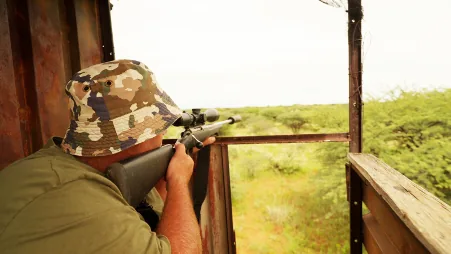
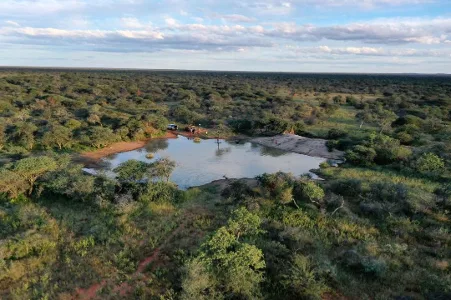
Our hunting area is located in the heart of Namibia in the Kalahari sandveld and offers ideal conditions for spot-and-stalk and stand hunting.
Look forward to an impressive diversity of species in the Namibian bush and grass savanna. The hunting area comprises two farms totaling 5,840 hectares (14,430 acres) – vast and unspoiled nature.
Since 1953 on Ombe — a name synonymous with sustainable hunting, Kalahari wilderness, and warm Namibian hospitality.
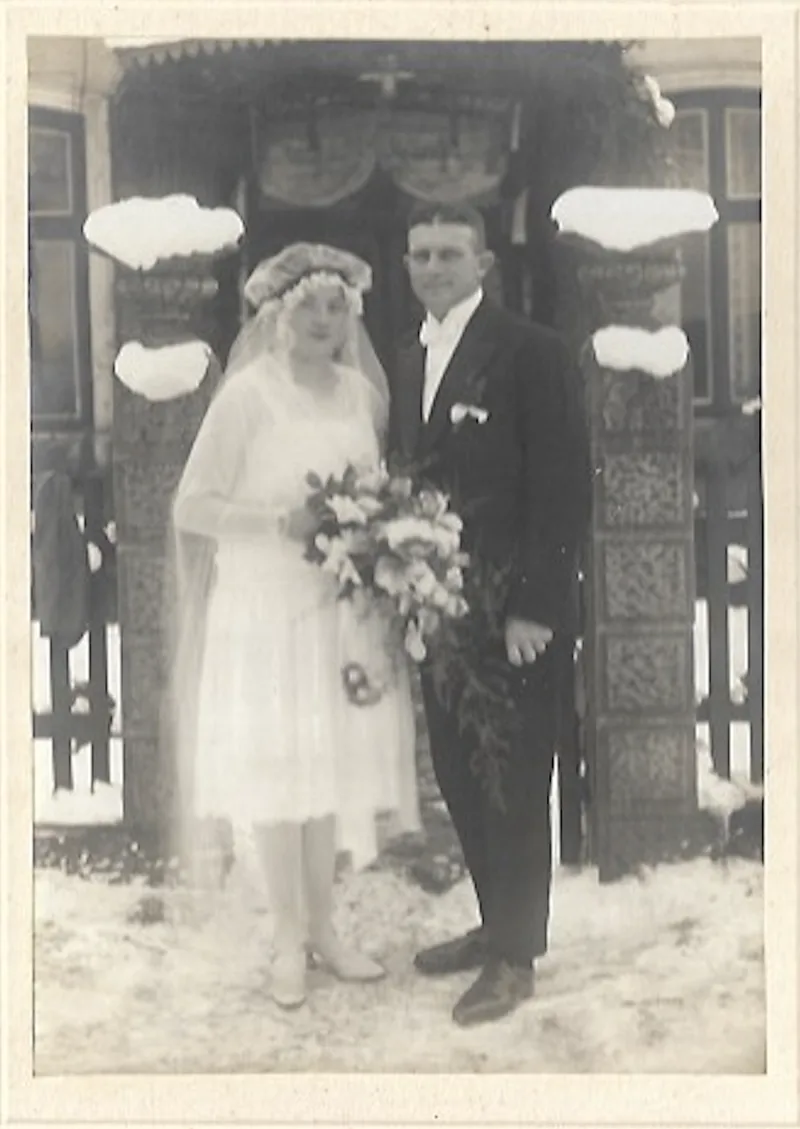
The Zwar family settles on Ombe in the Kalahari, beginning a farming legacy that continues to this day.
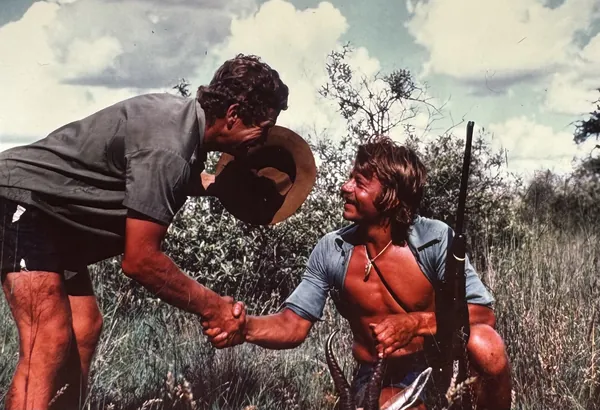
Ombe opens its doors to international hunting guests for the first time, establishing a reputation across Europe.
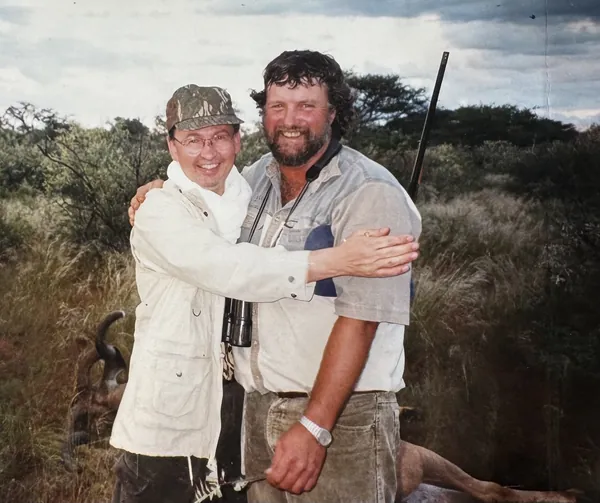
Officially registered as a guest farm. The hunting programme expands alongside growing wildlife conservation efforts.
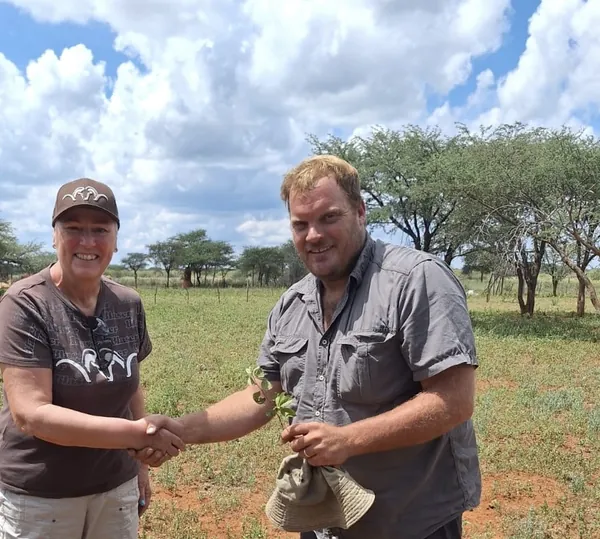
The fourth generation takes the helm. Farm expanded to 5,840 ha in 2025 — ensuring long-term sustainability.
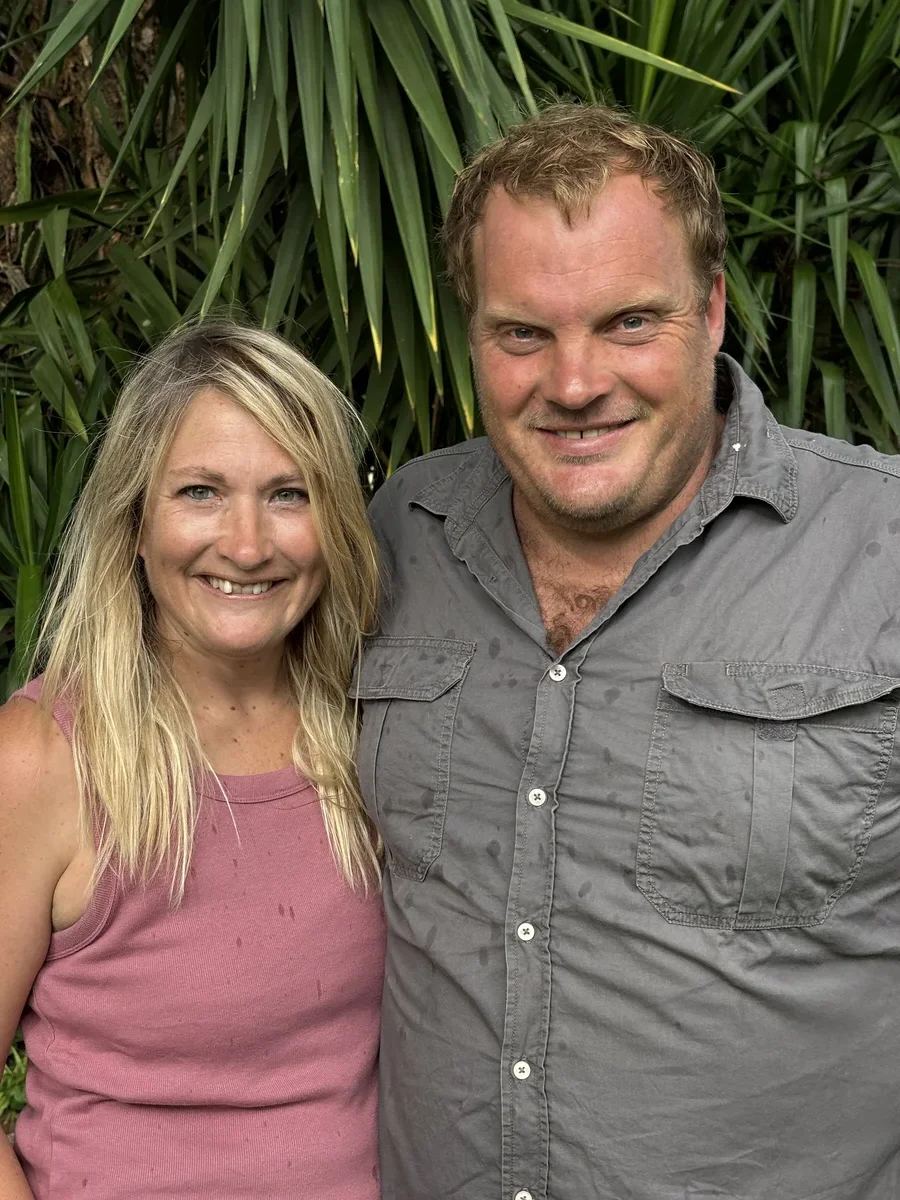
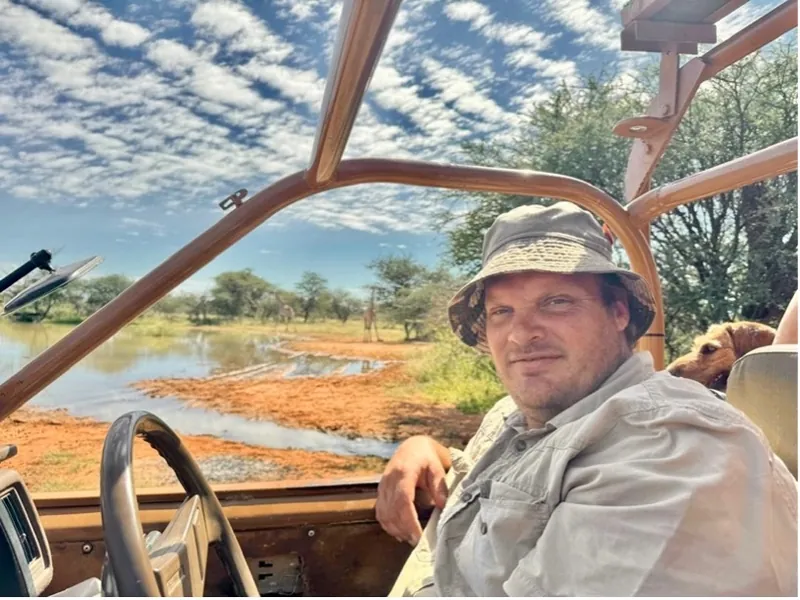
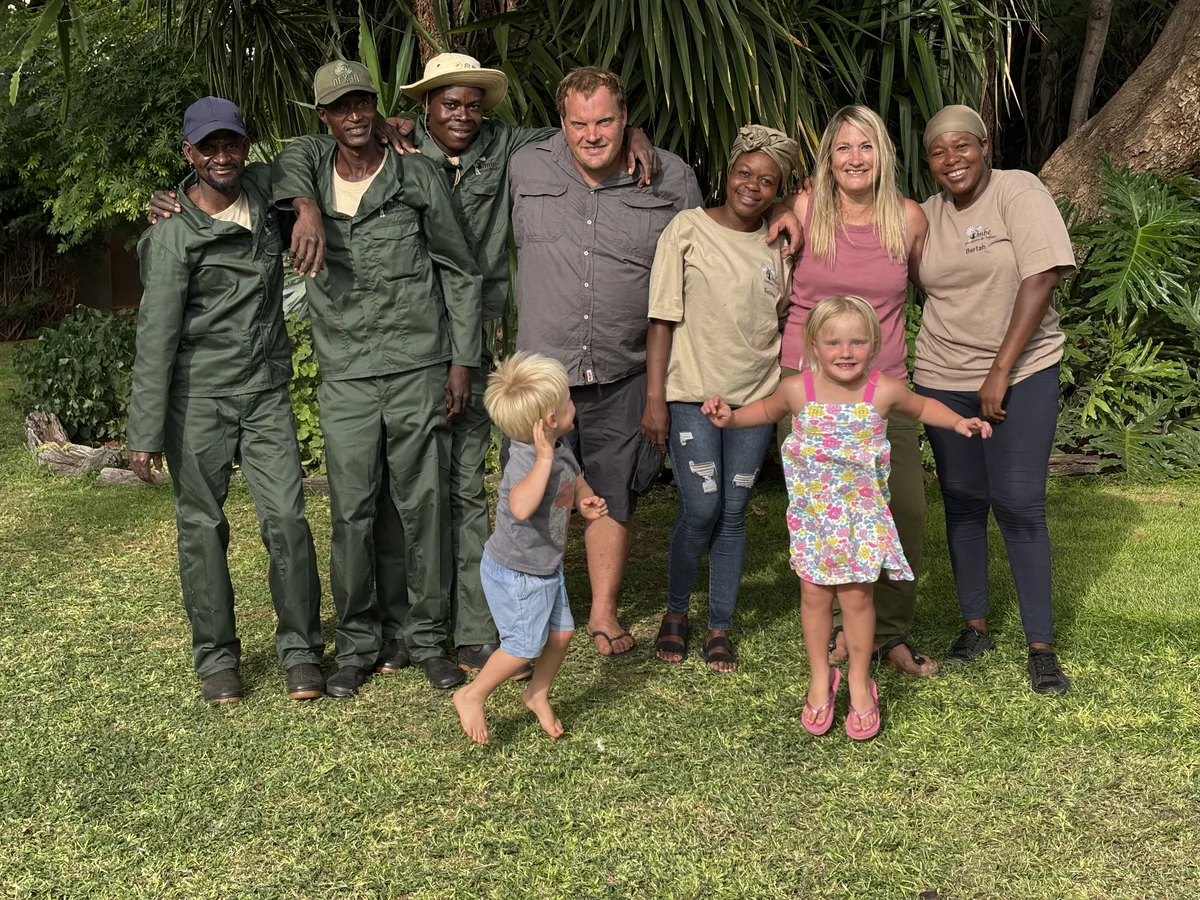
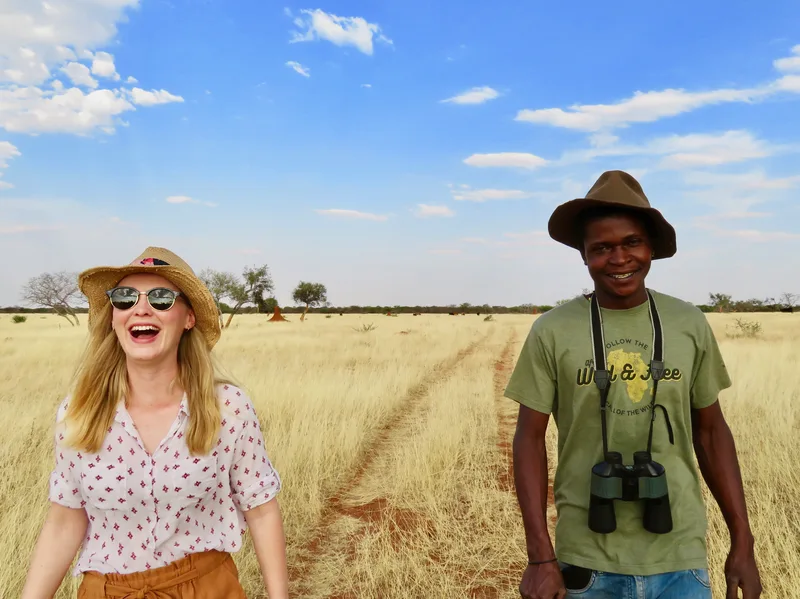
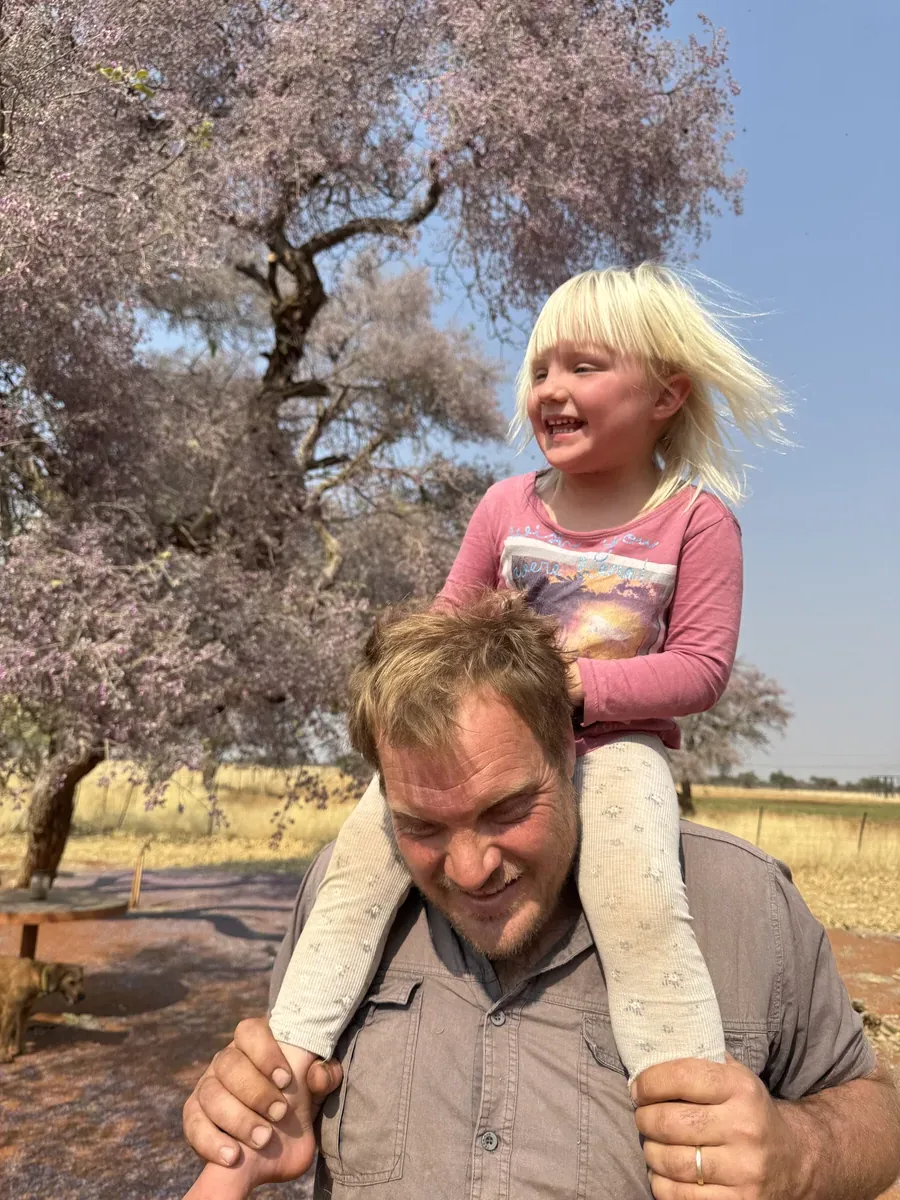
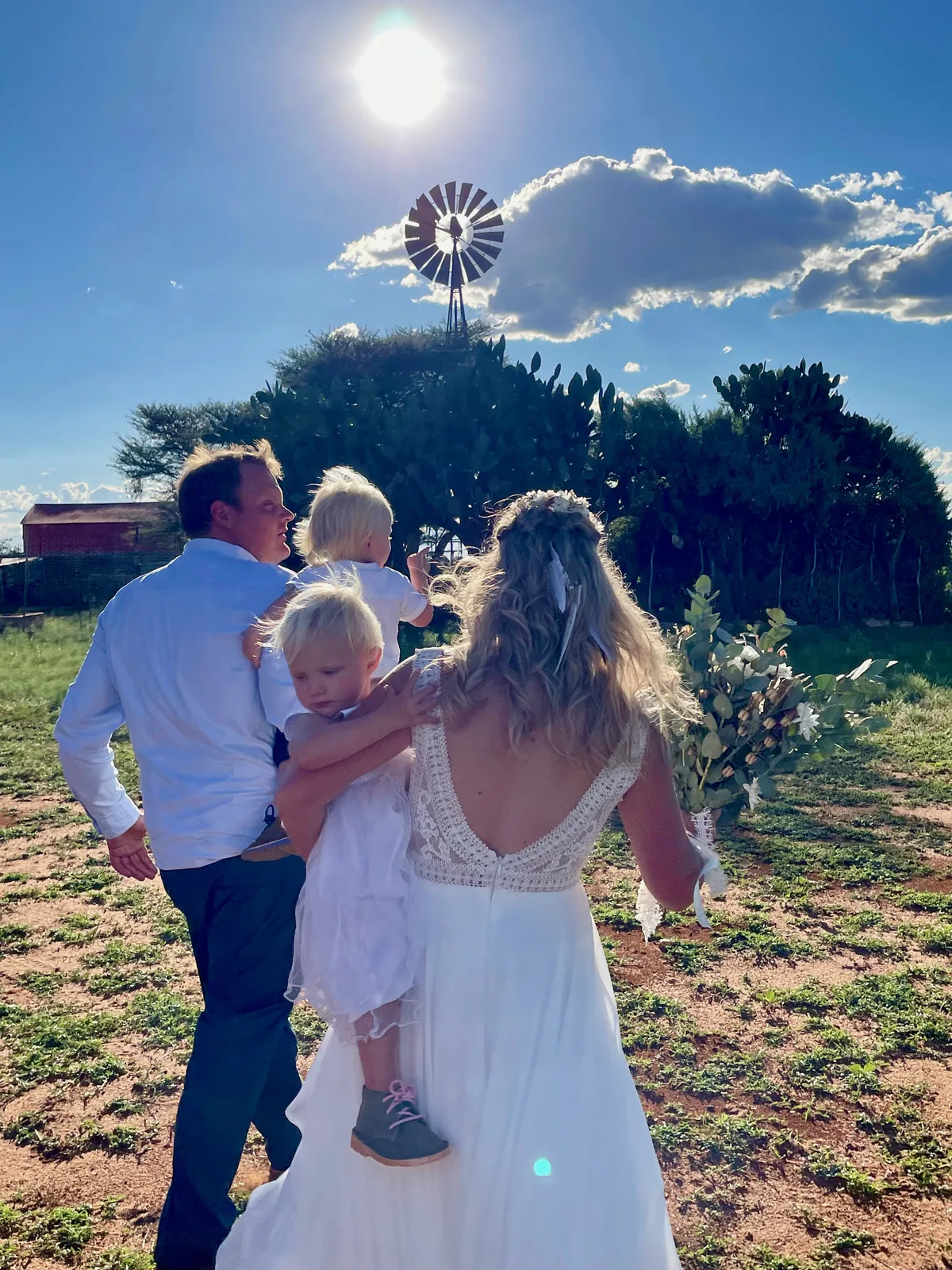
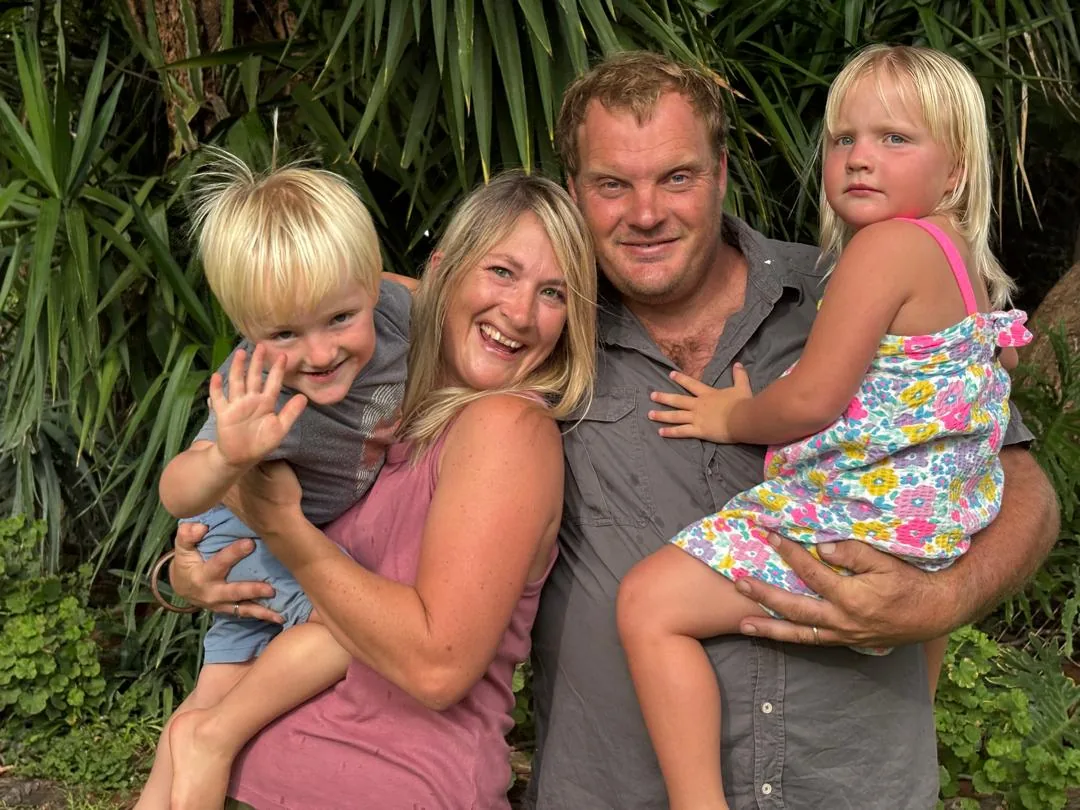
Since 2019, Florian and Katrin have personally welcomed every guest. As owners, they run and manage the hunting operation themselves — offering an authentic insight into everyday Namibian farm life alongside an exceptional hunting experience.
In 2025, an additional 1,700 hectares were acquired, bringing the total hunting area to 5,840 hectares (14,430 acres). Wildlife genetics remain diverse as animals move freely between neighbouring farms — guaranteeing quality trophies year after year.
Plan Your Hunt
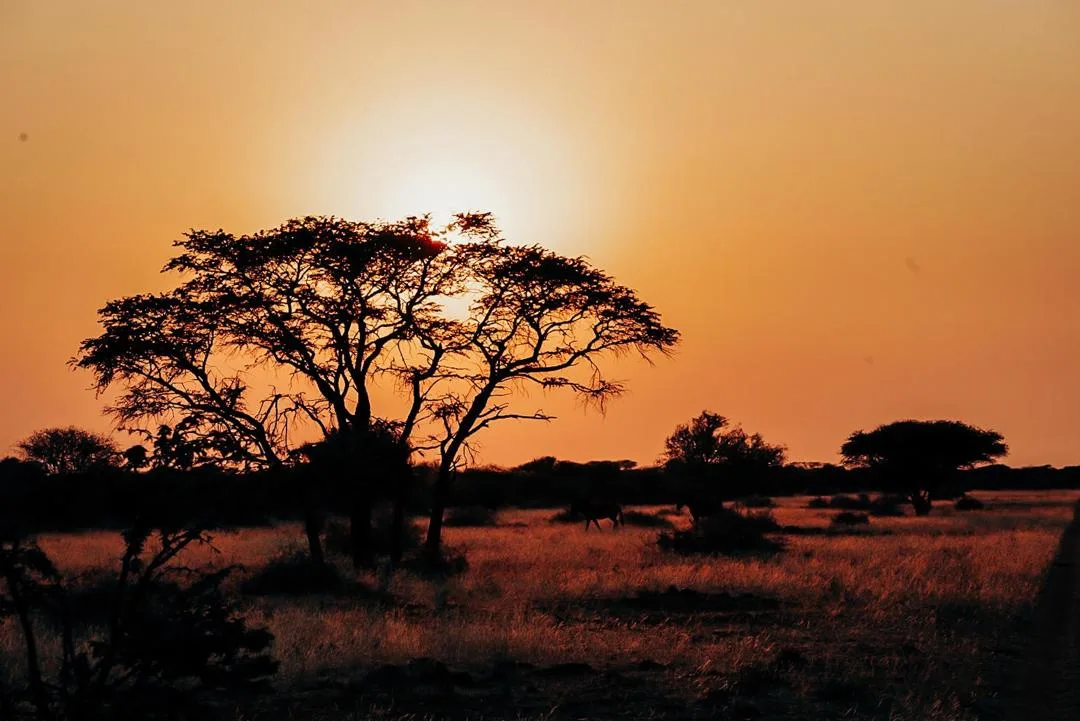
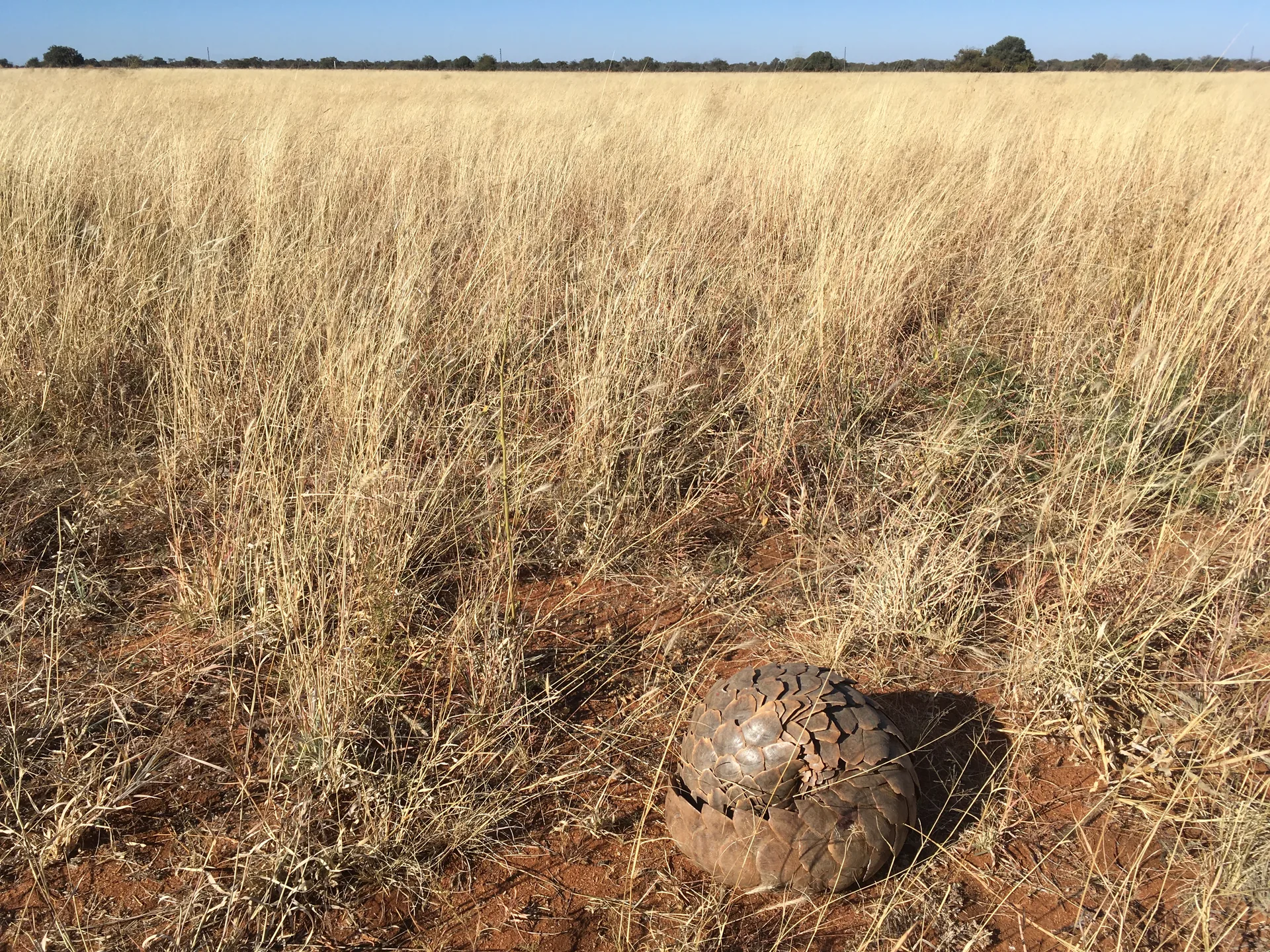
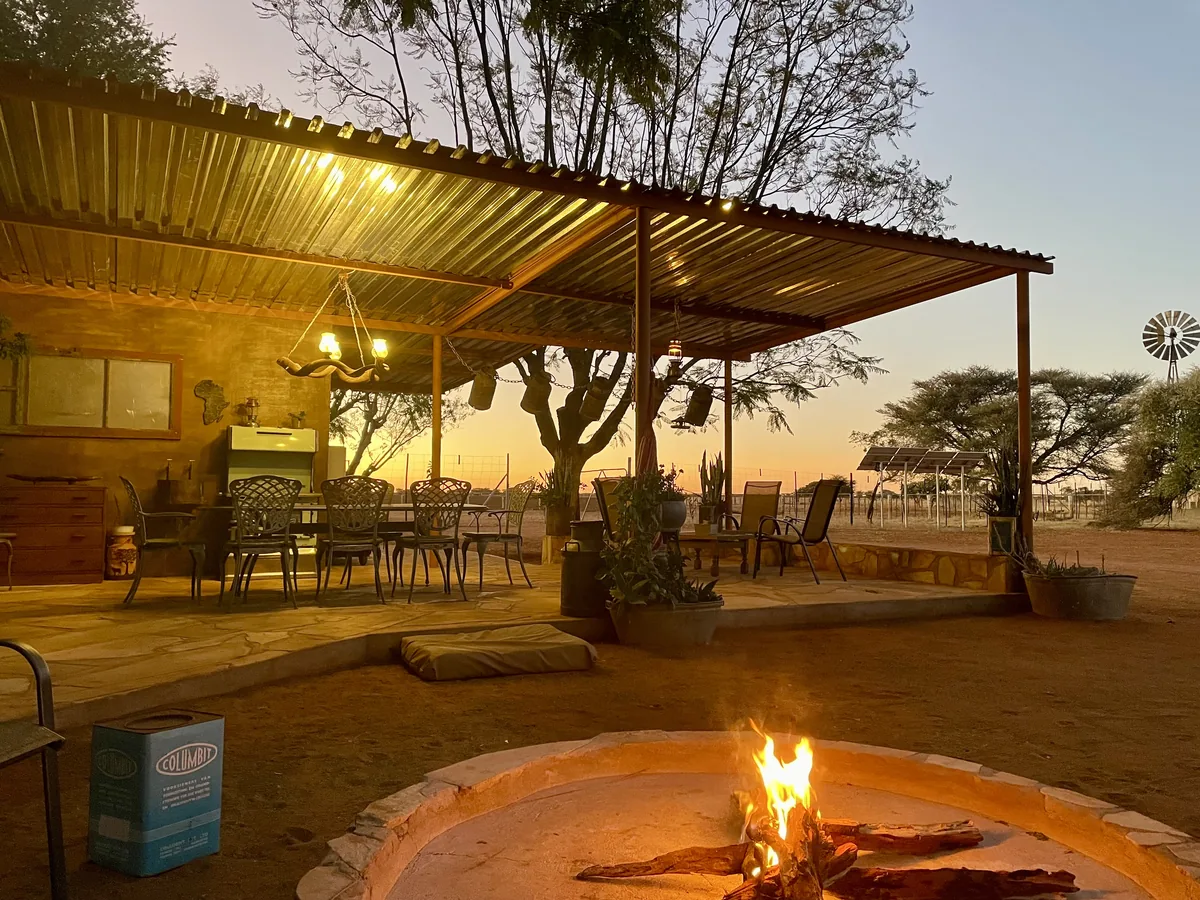
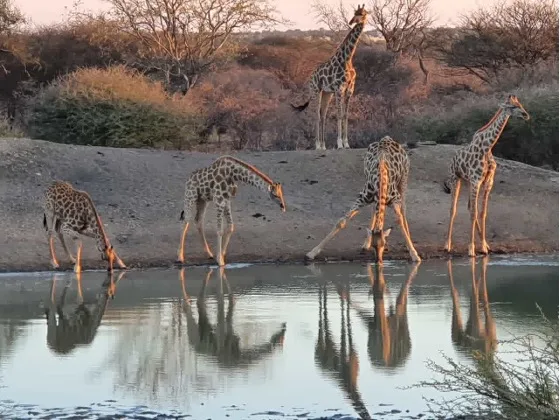
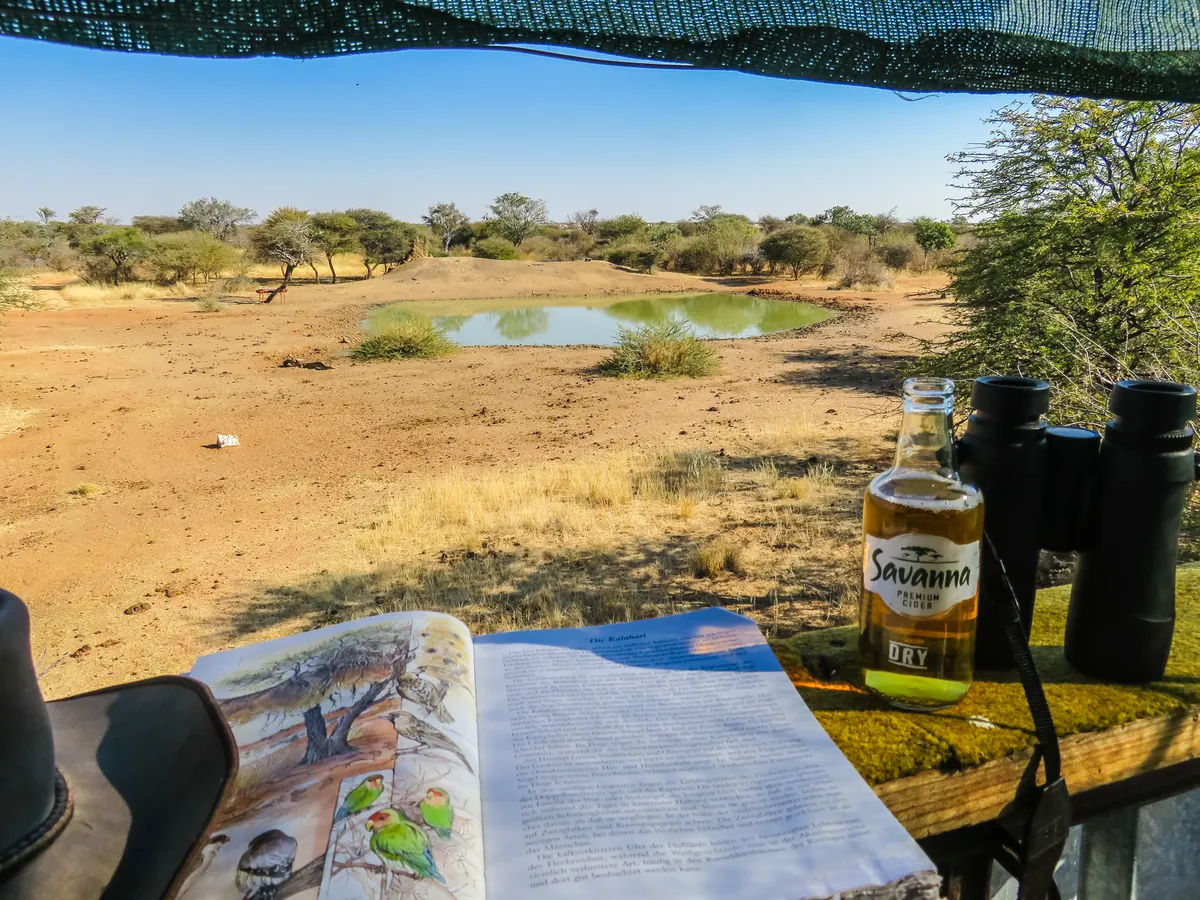
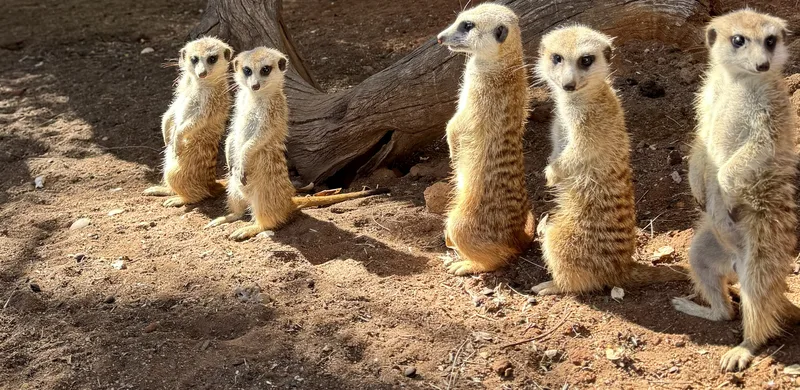
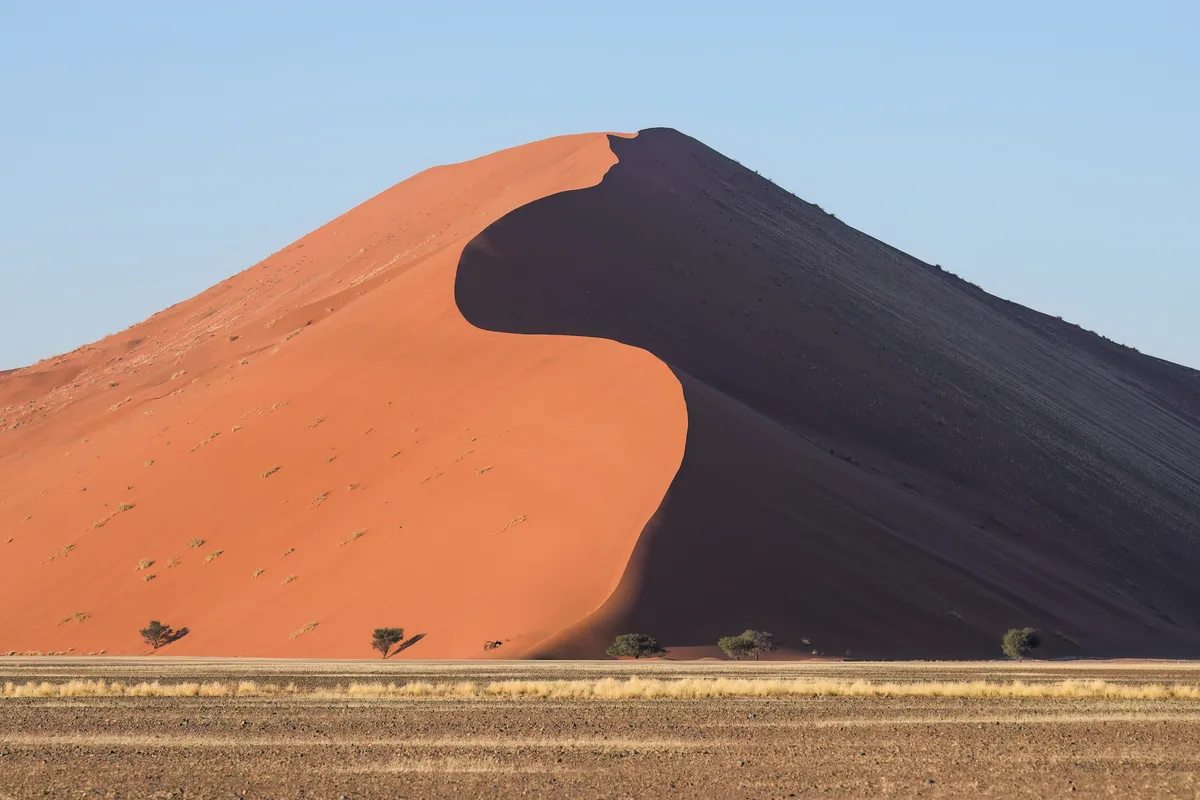
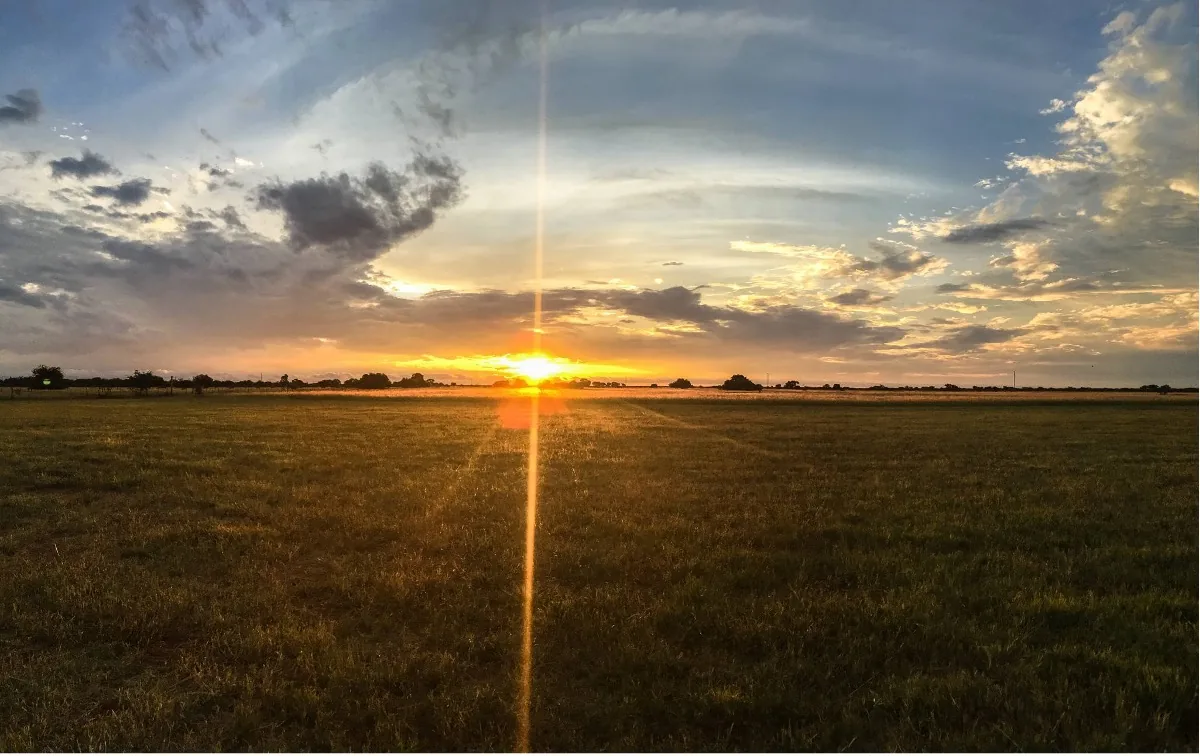
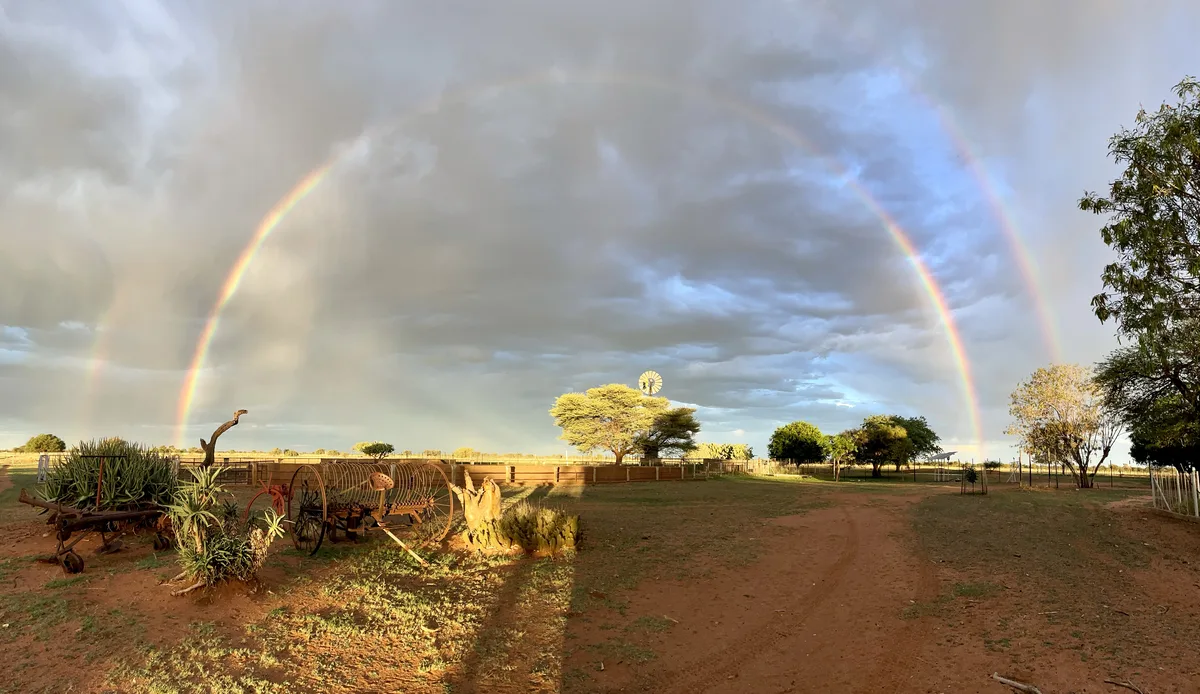
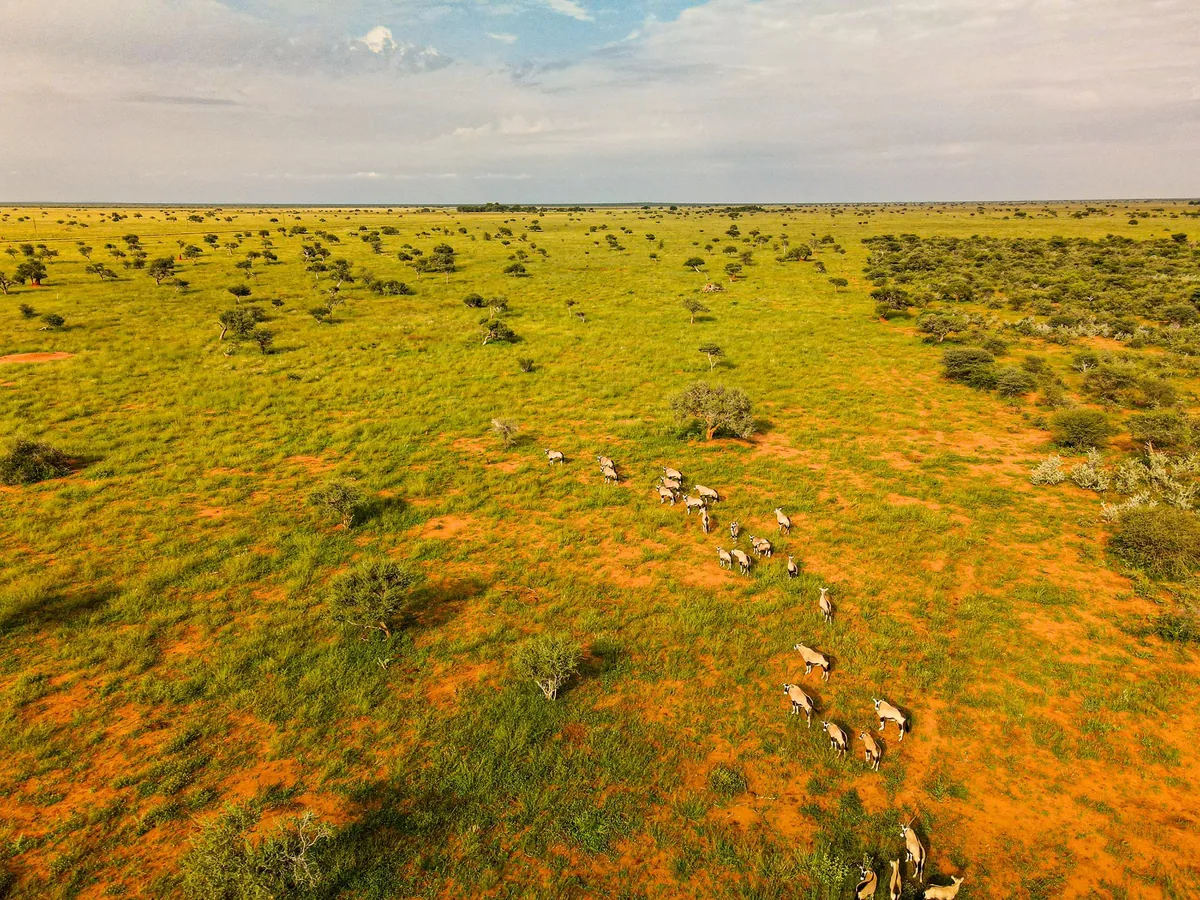
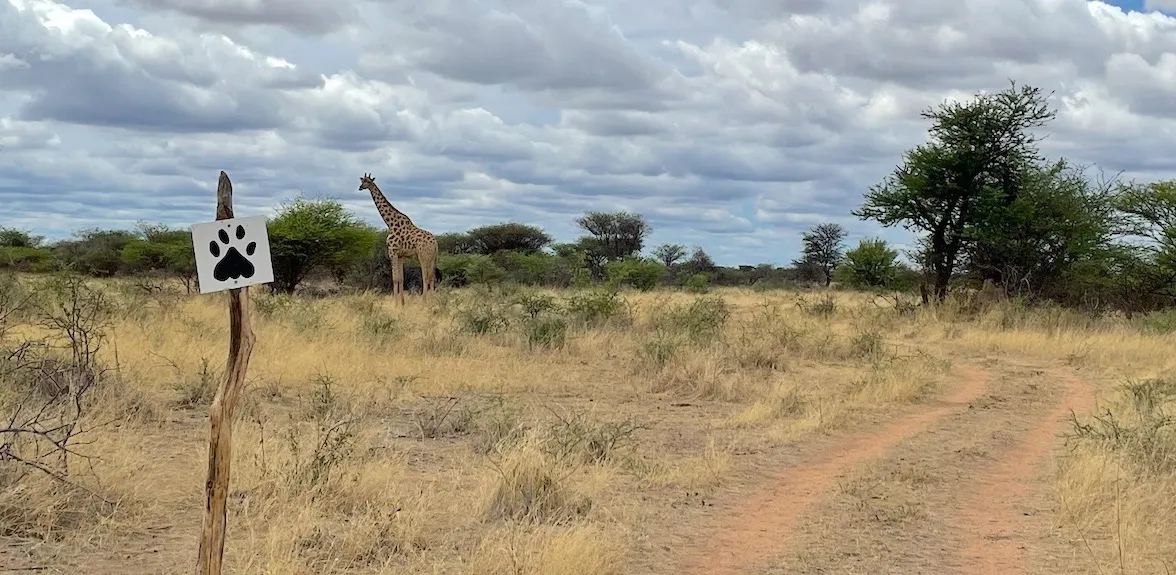
Red Kalahari sand, mighty camelthorn acacias, and varied bush and grass savannas — exceptional biodiversity in an immersive wilderness.
Life on the farm, in the field, and around the campfire — follow our journey on Instagram.
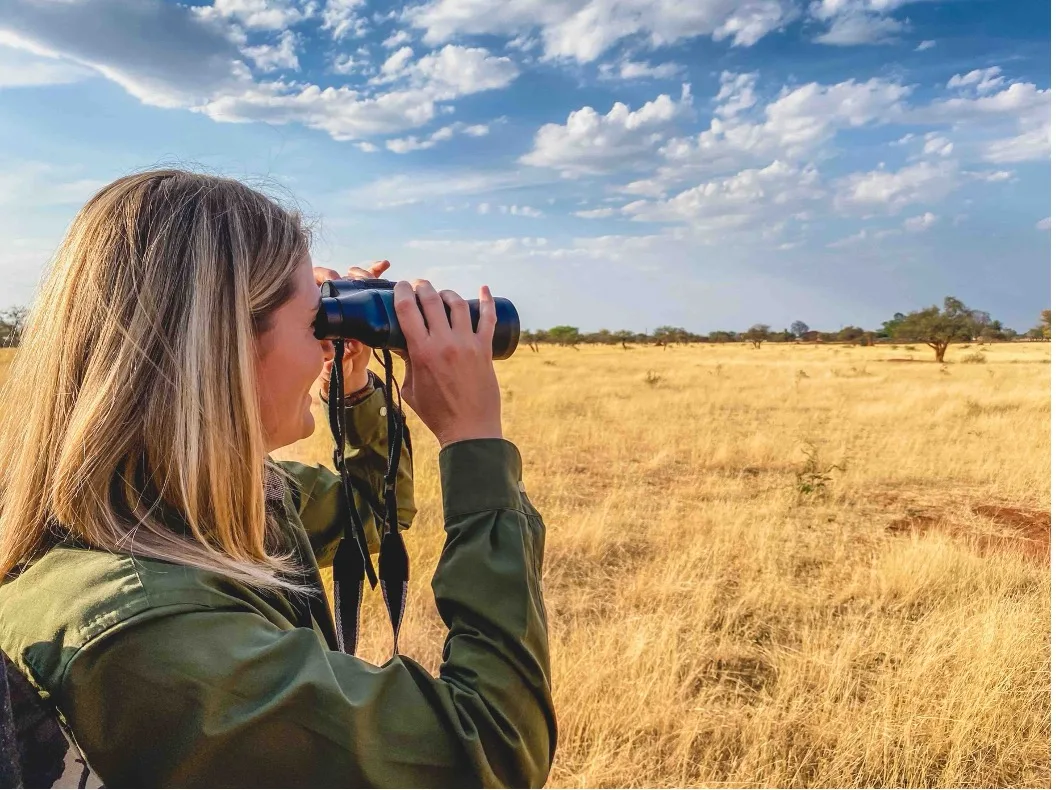
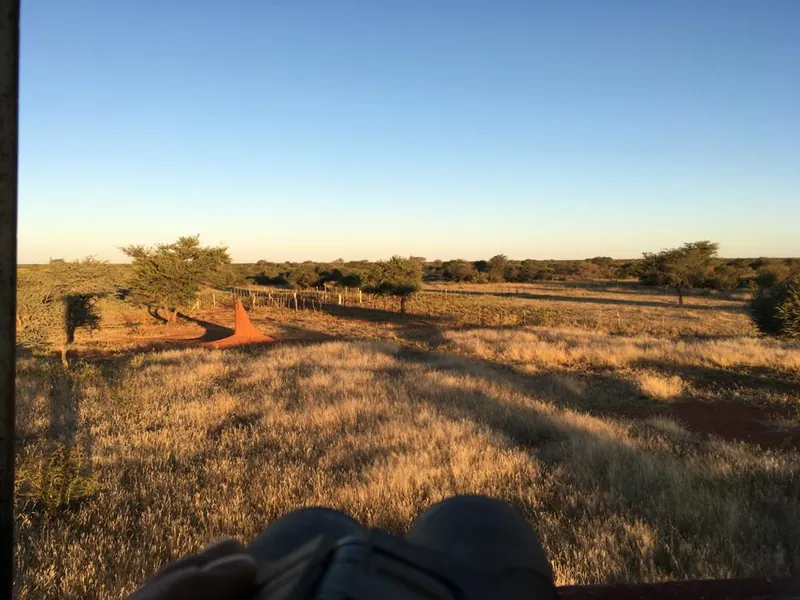
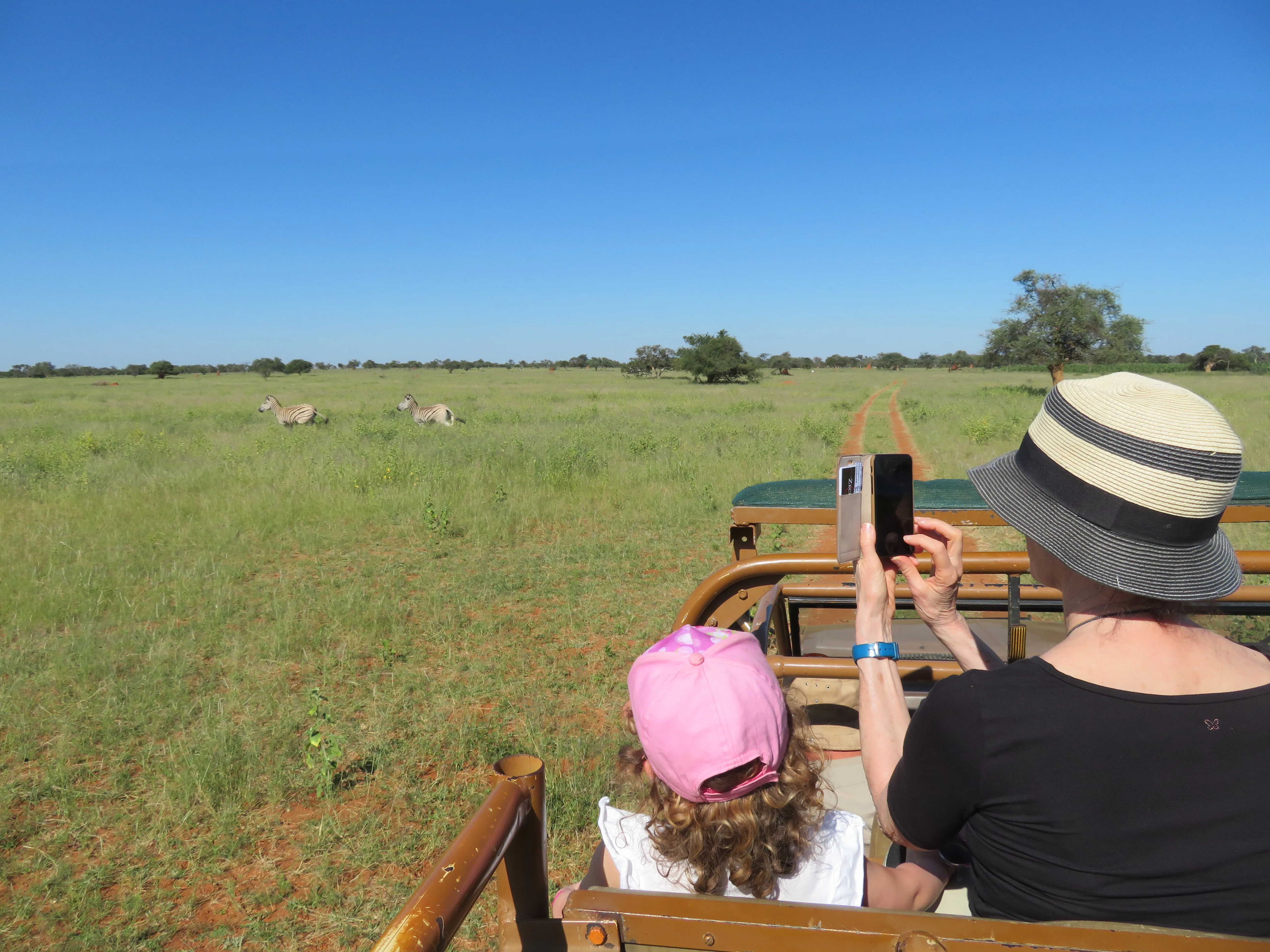
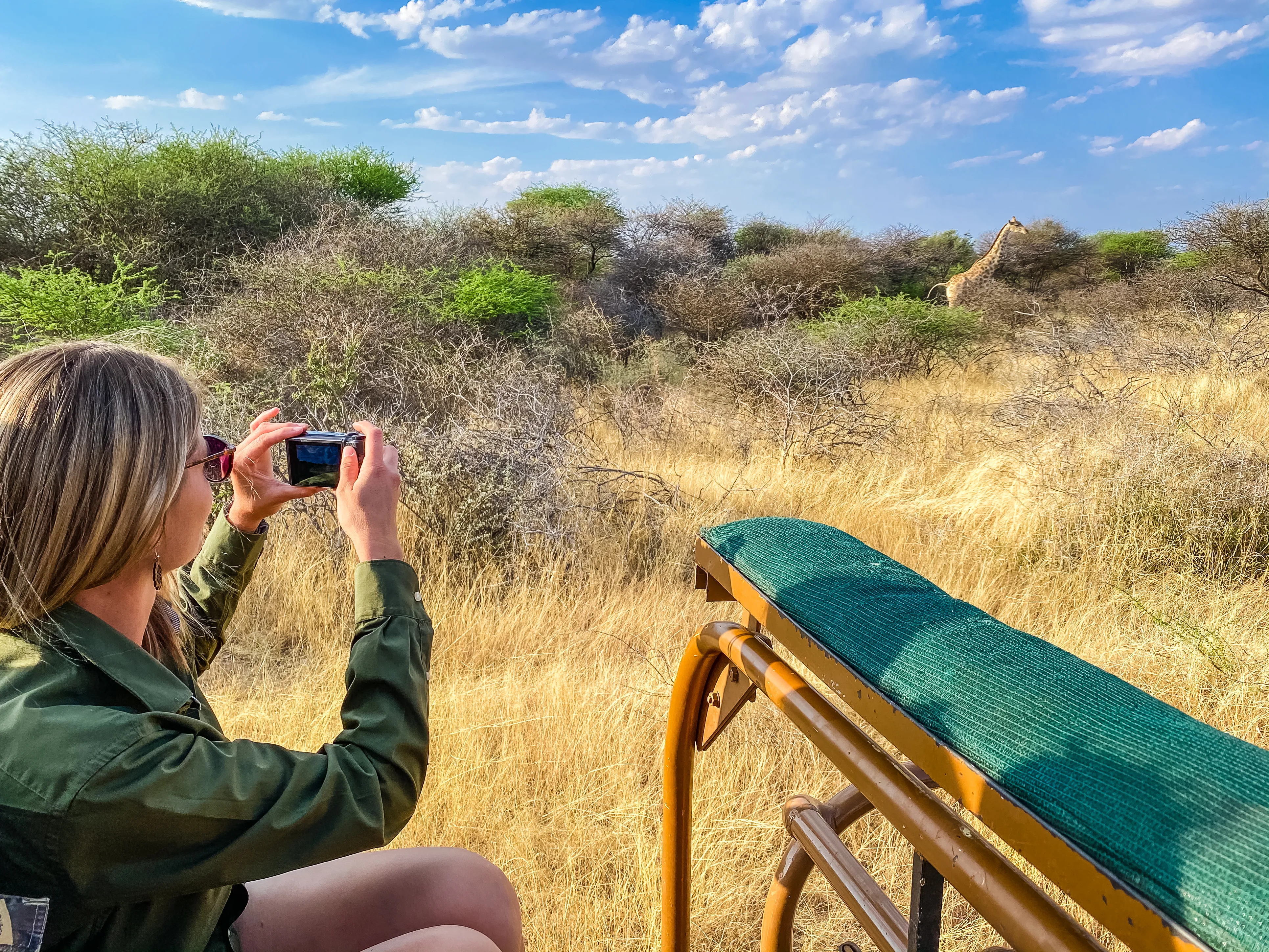
With the safari vehicle, you drive into the hunting area and search for fresh tracks. Once a suitable animal is spotted, the stalk begins — wind, cover, and movement guiding every step. Kilometre-long marches through open savannas require endurance and reward with an incomparable experience.
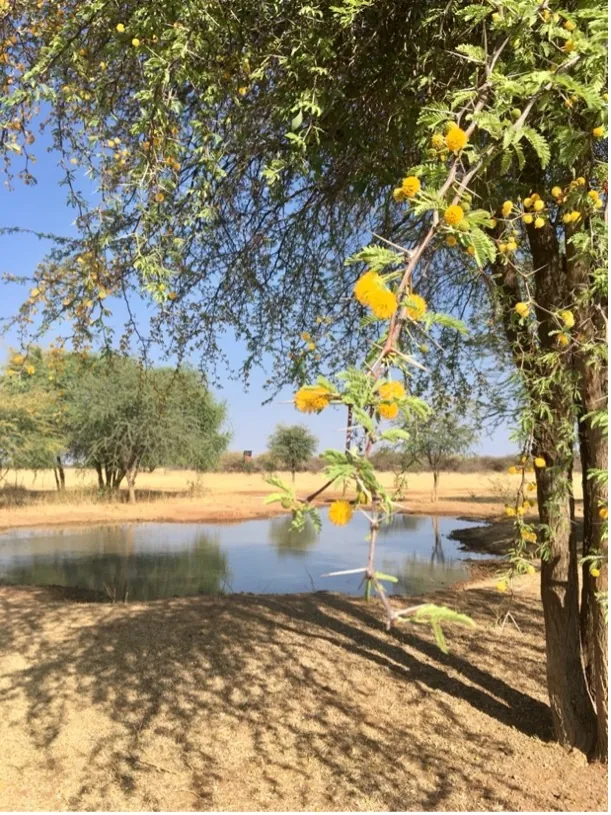
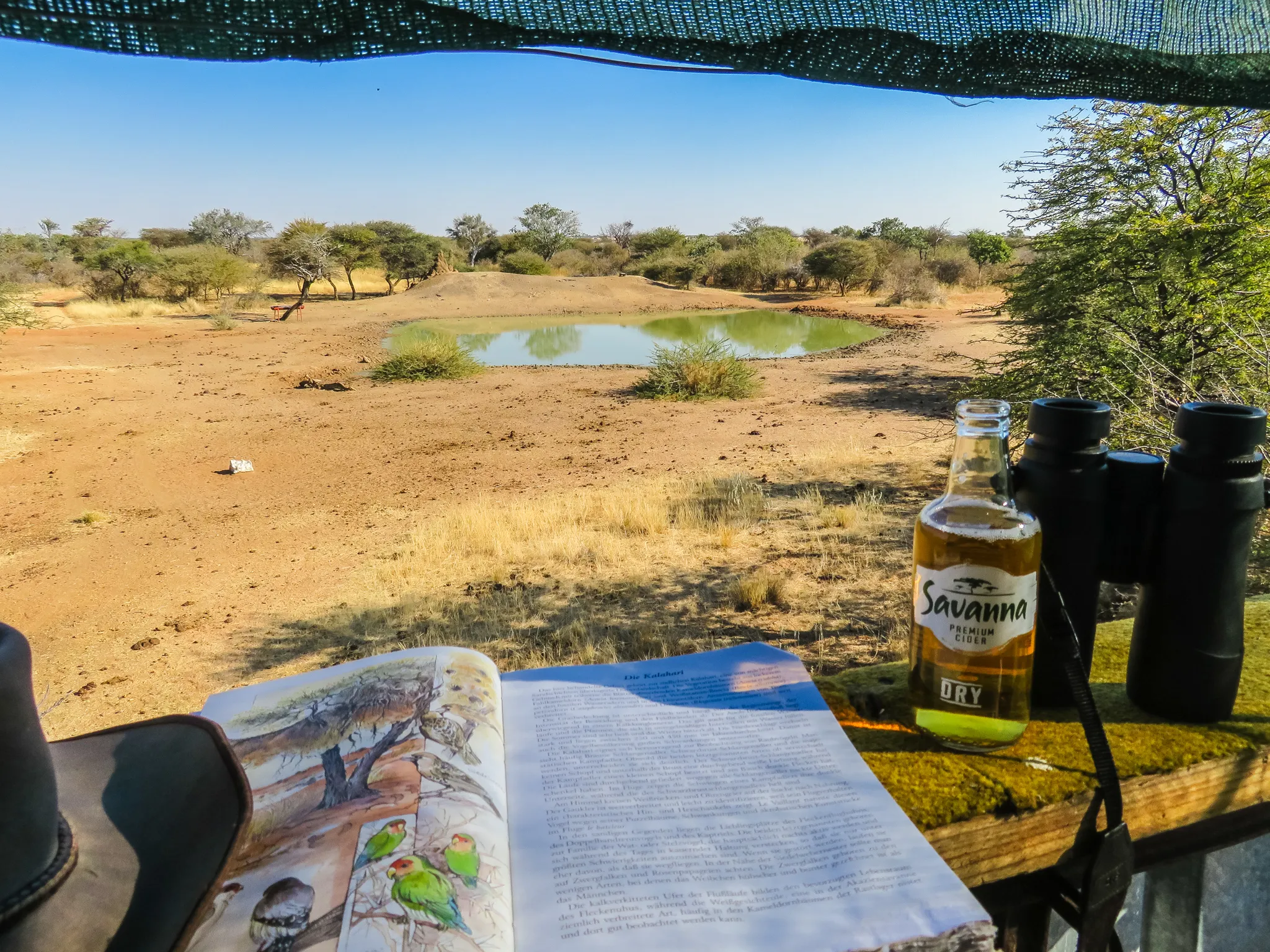
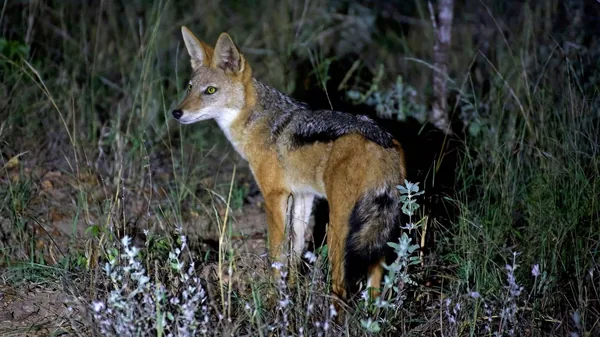
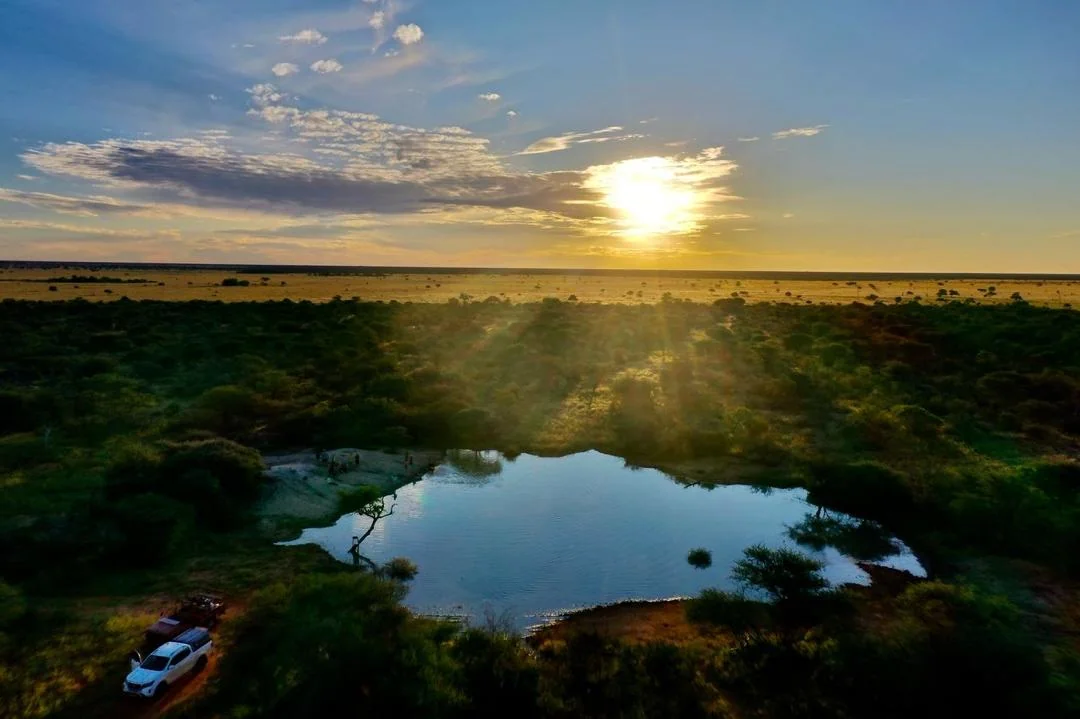
From elevated hides or ground blinds overlooking Ombe's 15+ waterholes, guests experience intense moments — birdsong and silence, until a trophy steps from the bush. At dusk, the waterholes attract predators: leopard, hyena, and a surprising diversity of nocturnal wildlife.
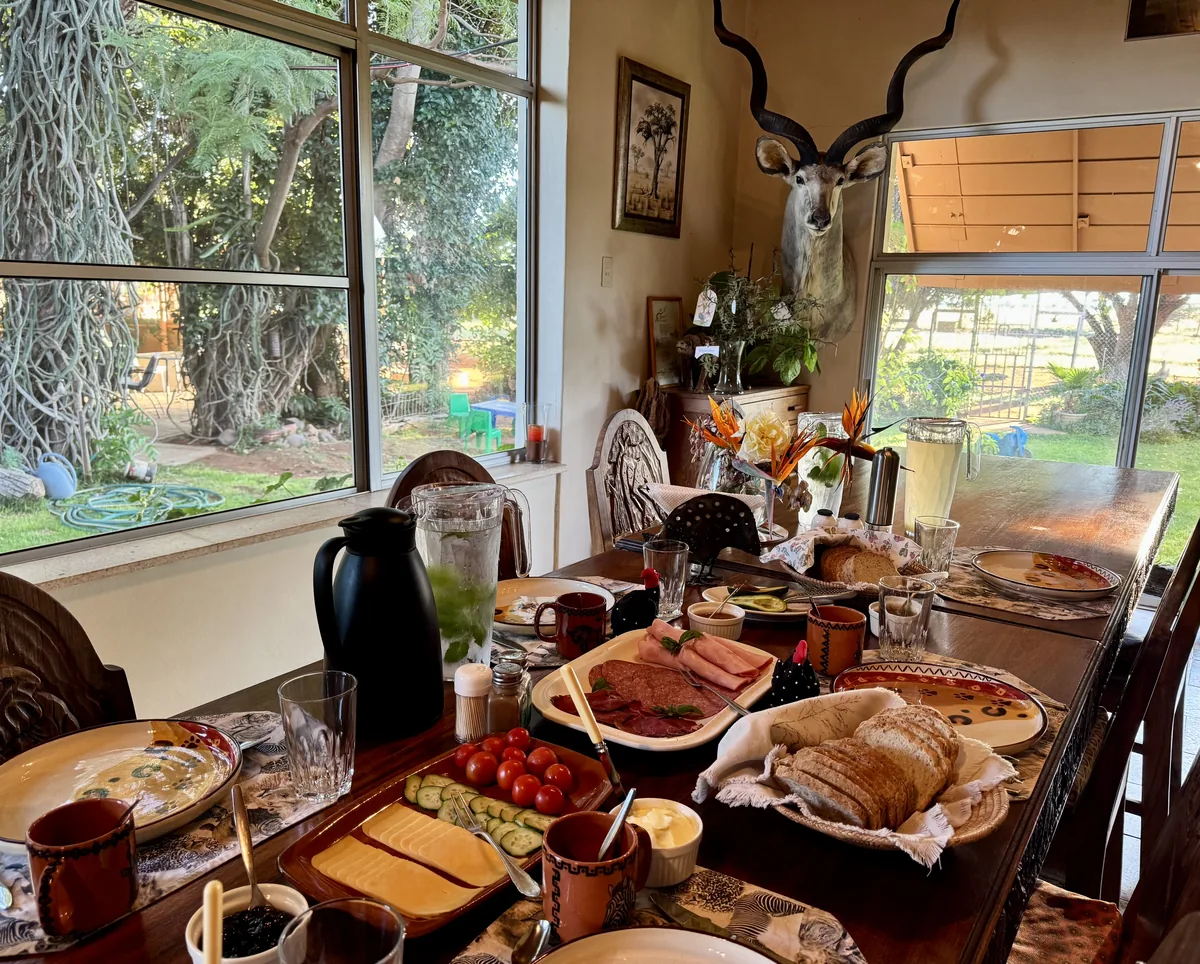
The hunting day begins early with a hearty breakfast. At sunrise you head out — returning for lunch before an afternoon hunt and an evening around the fire.
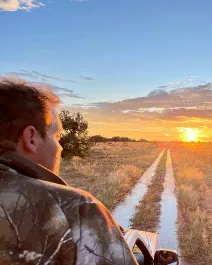
At sunrise you head out by vehicle into the hunting area — tracking or heading to the hide, depending on the day's chosen method.
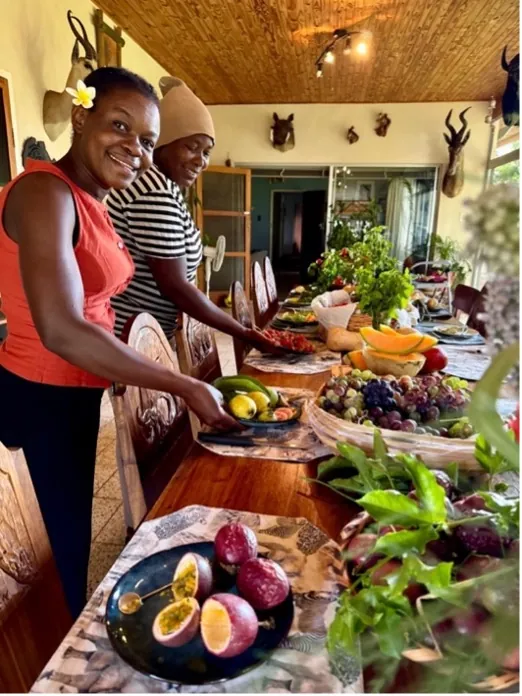
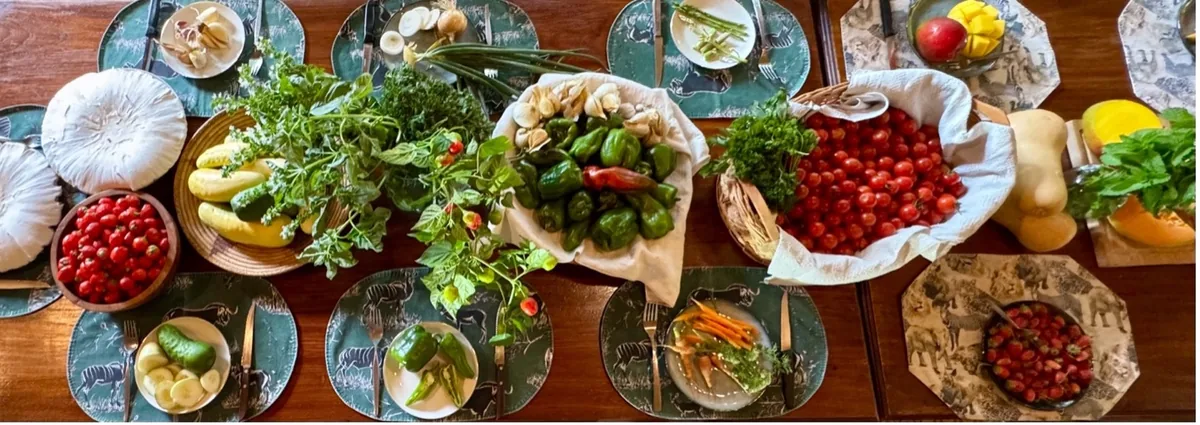
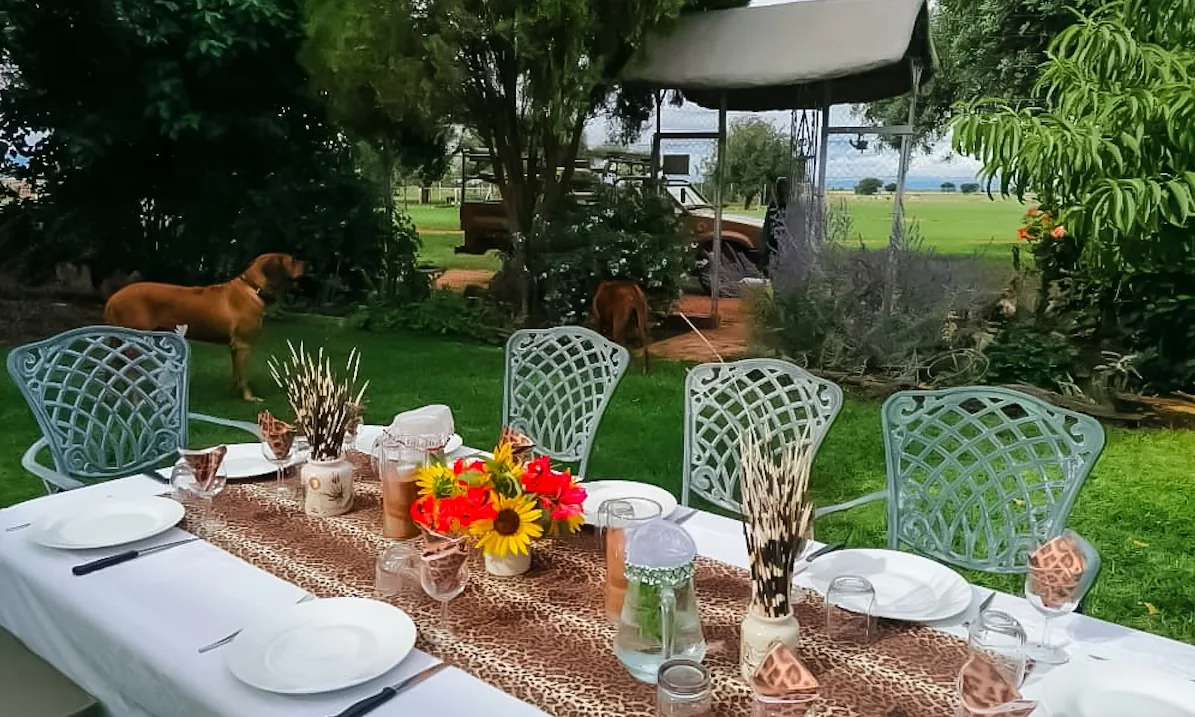
A delicious lunch plate on the terrace or under a camelthorn tree — fruit and vegetables from Ombe's organic garden. After a midday rest with coffee and cake, the afternoon hunt begins.
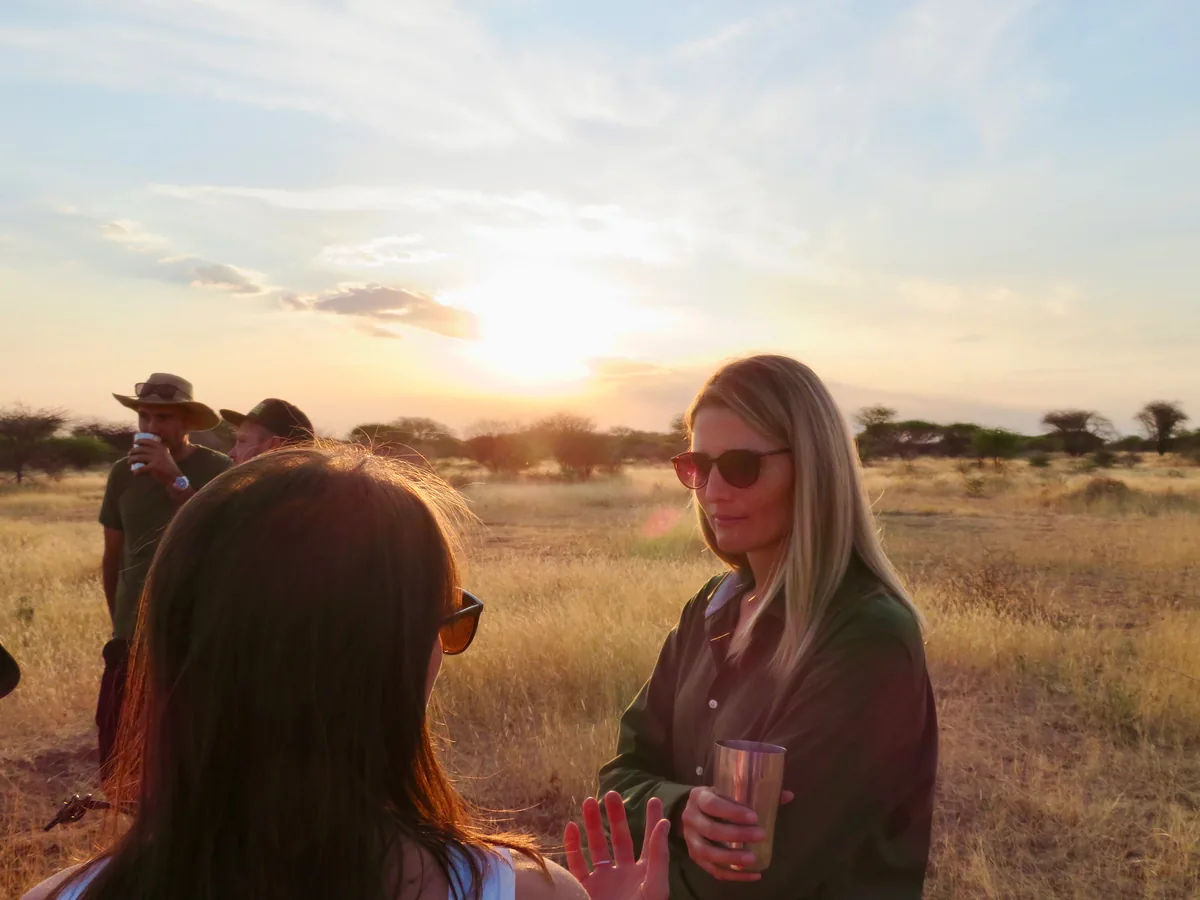
German-Namibian dishes and local specialties in a cosy atmosphere. Florian's oryx schnitzel is a house favourite. End the evening relaxed by the campfire under the African stars.
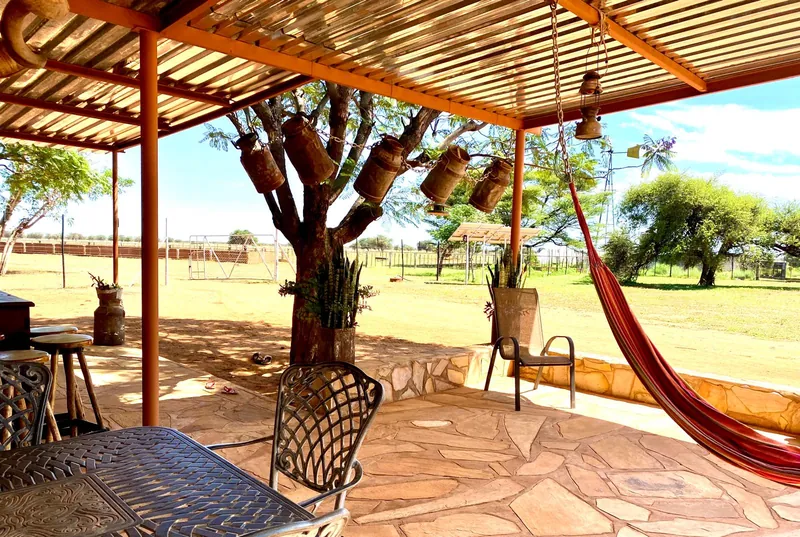
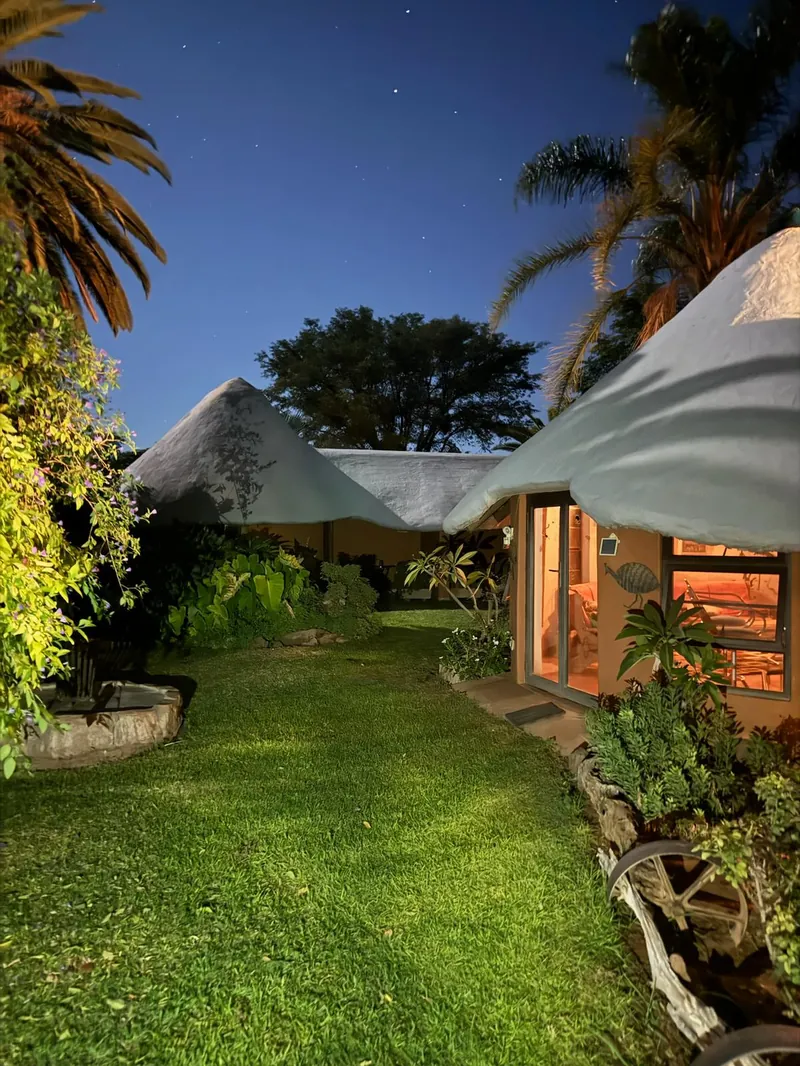
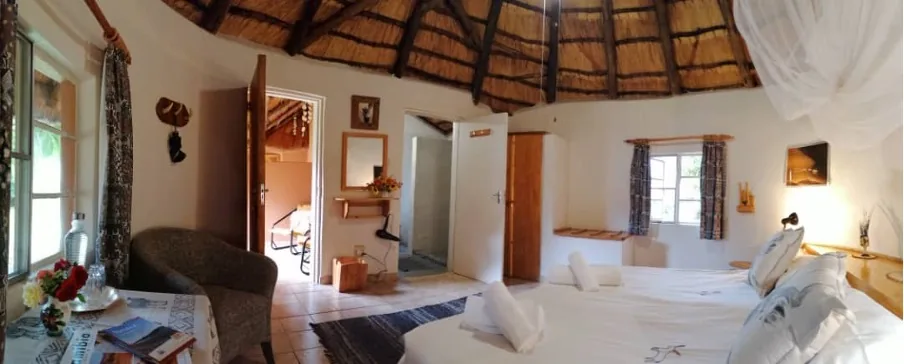
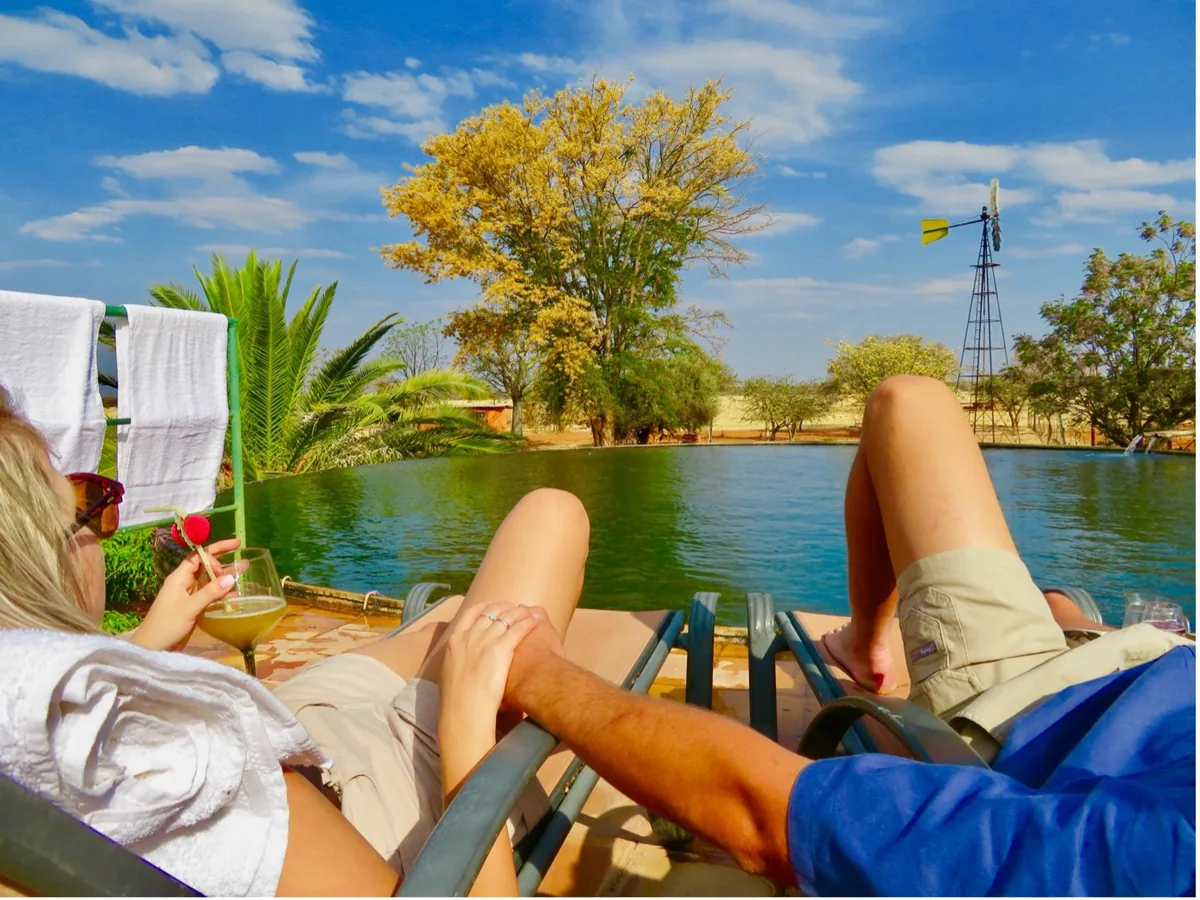
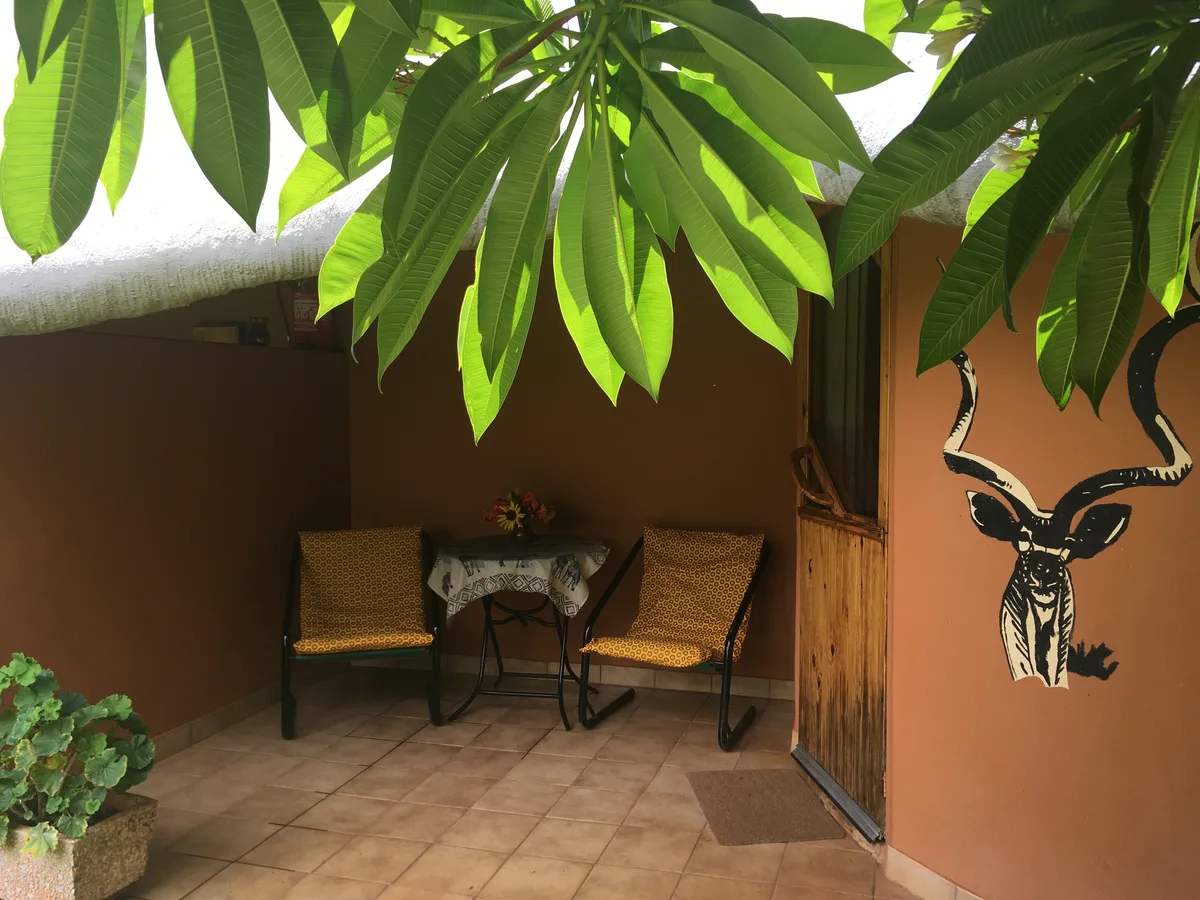
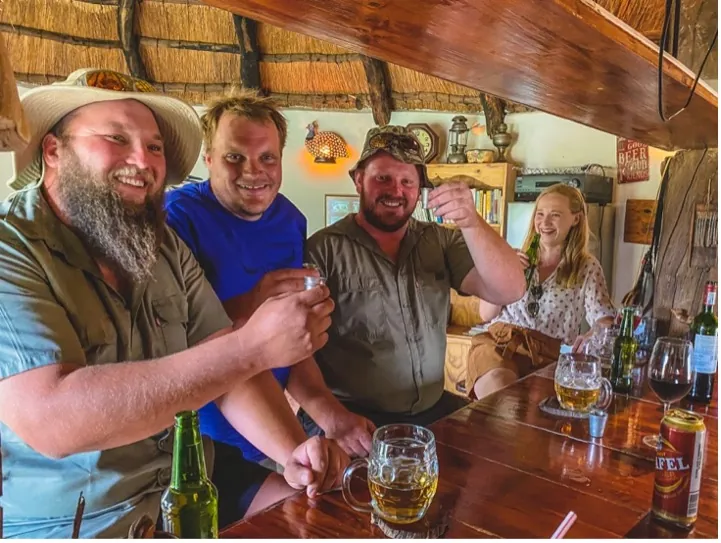
Comfortable, air-conditioned guest rooms in an authentic farm setting. Relax on the shaded veranda, take a dip in the pool, or enjoy a cold sundowner at the bar.
Ombe is built on a philosophy of respect — for the land, the animals, and the people who call this farm home. Every safari is managed with long-term conservation in mind.
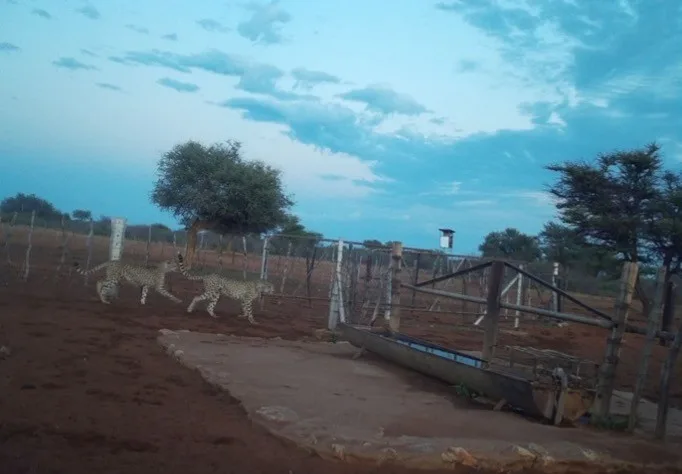
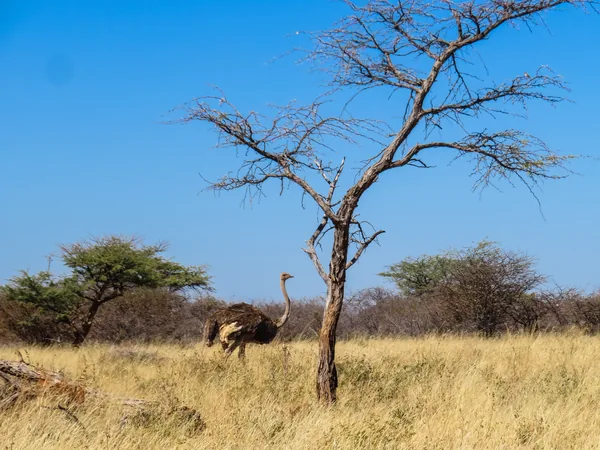
Giraffe, cheetah, springbok, lechwe, blesbok, nyala, waterbuck, and ostrich are never released for trophy hunting at Ombe.
We close the farm entirely in December and January, giving our game population essential rest and time to recover between seasons.
Namibia limits exports to a maximum of two trophies per species per hunter per year. All Ombe hunts comply fully with NAPHA regulations.
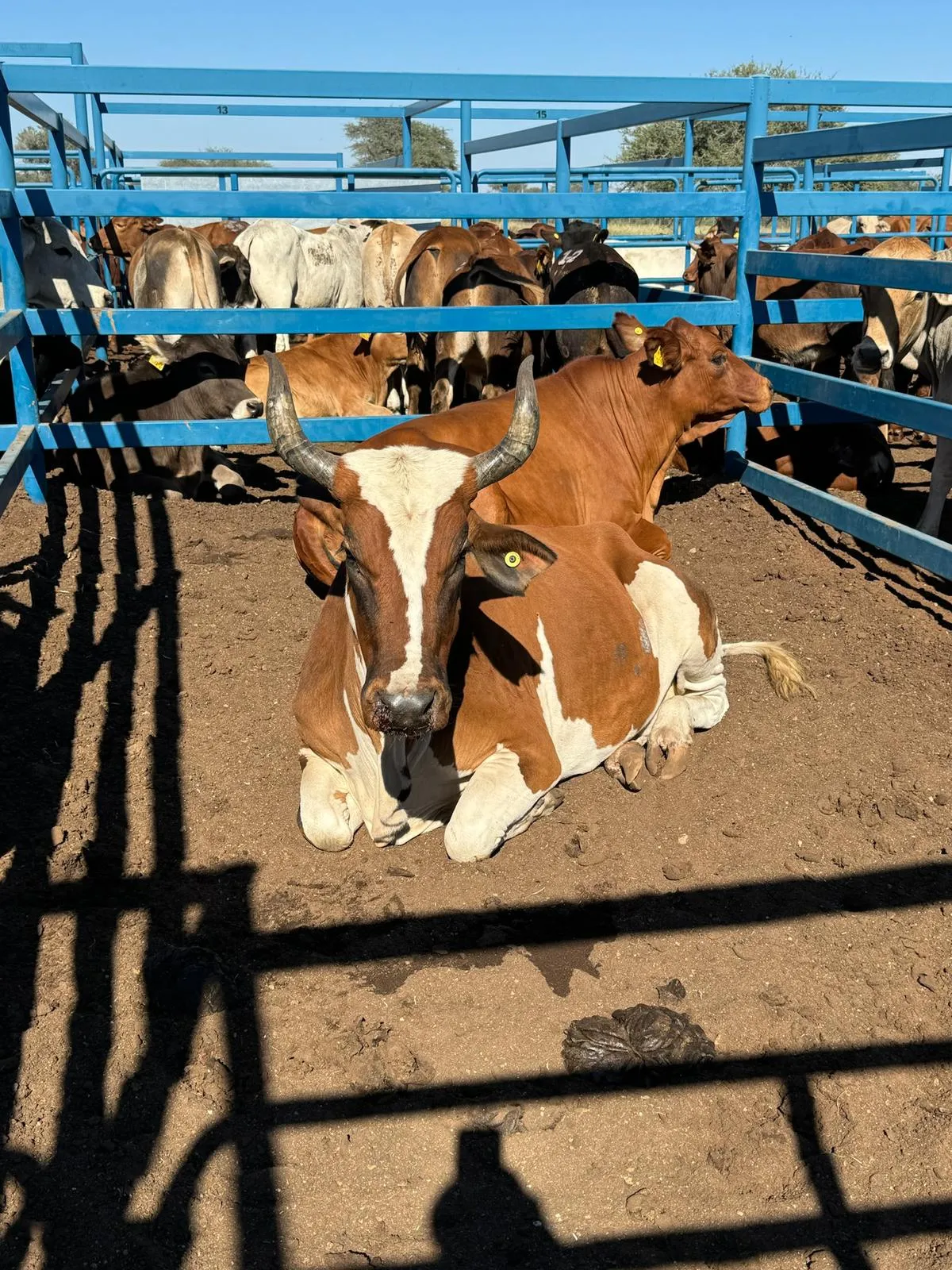
Every Ombe employee receives 2 kg of fresh game meat per week — ensuring the harvest benefits the people on the farm directly.
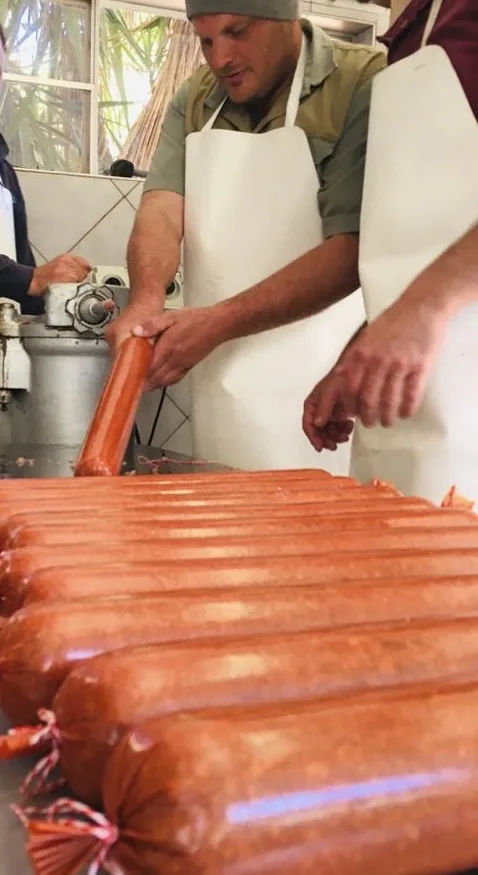
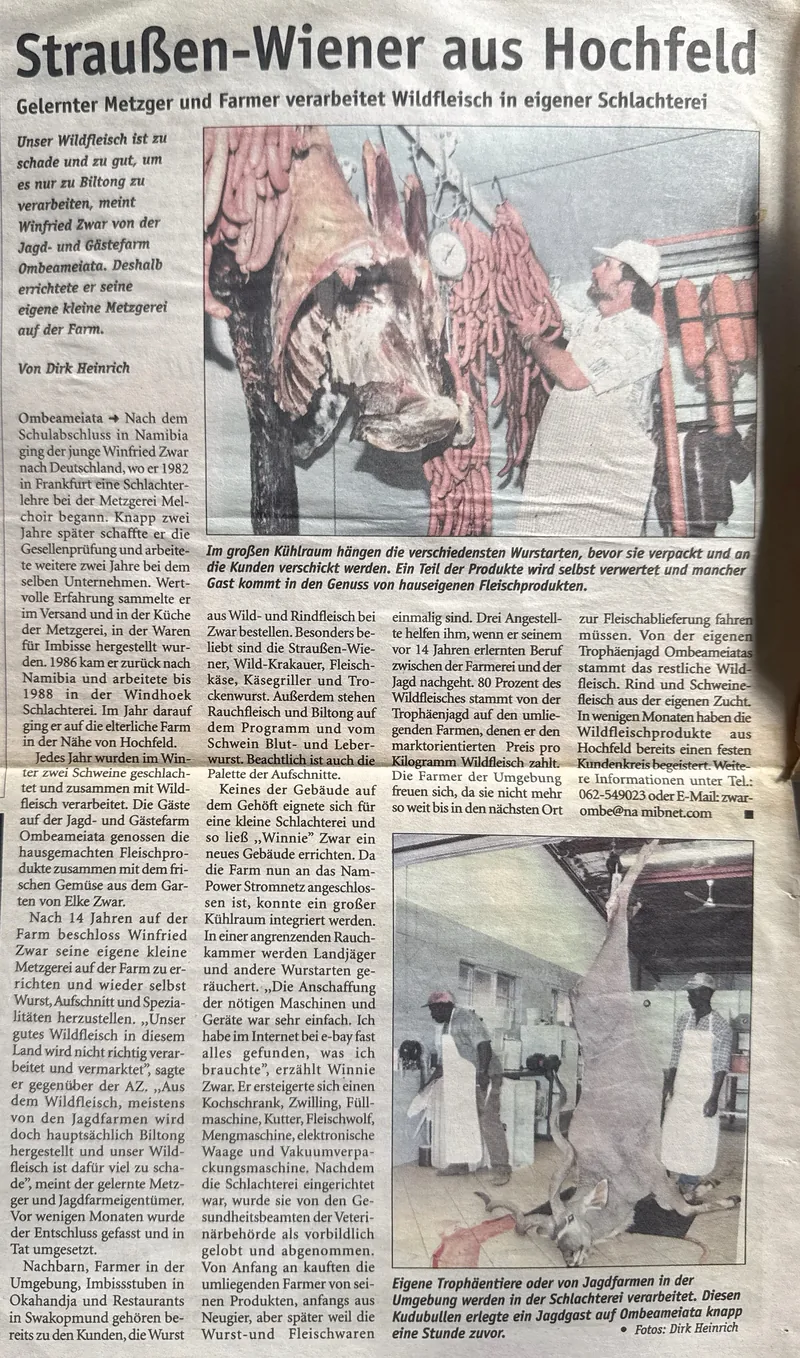
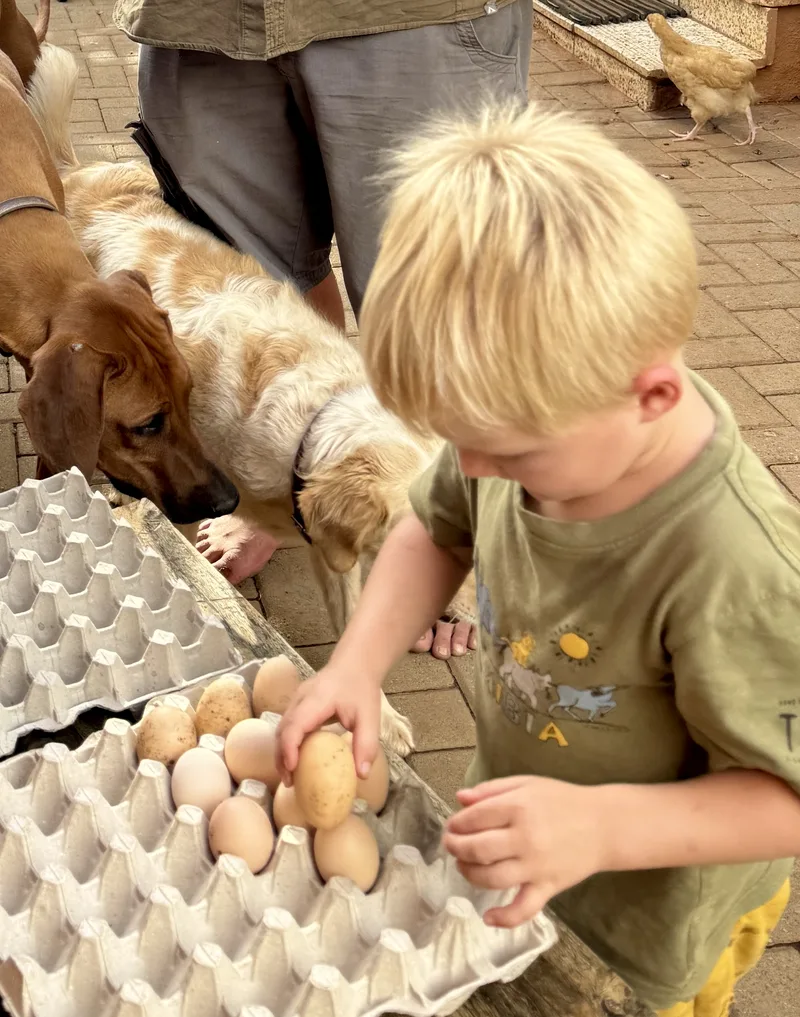
Florian is a second-generation master butcher. His on-site butchery turns every harvested animal into premium game specialties — nothing is wasted.
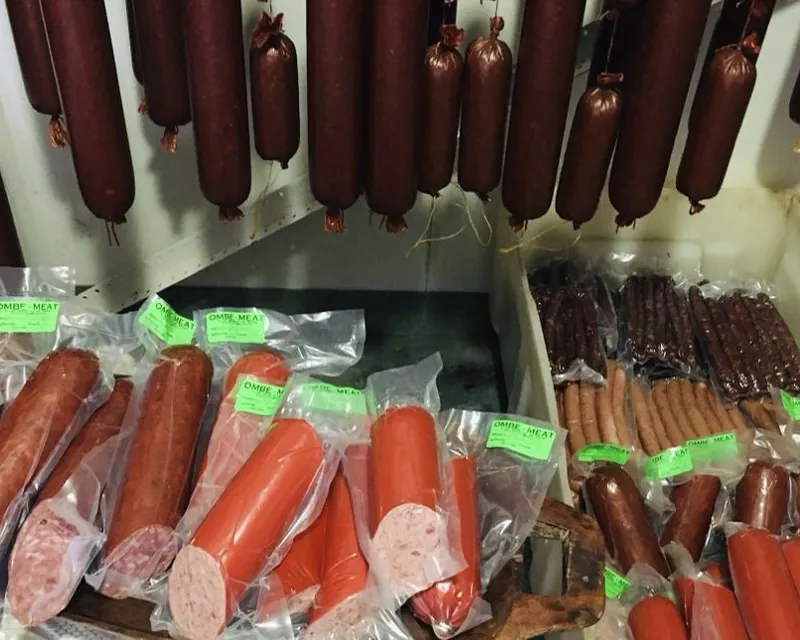
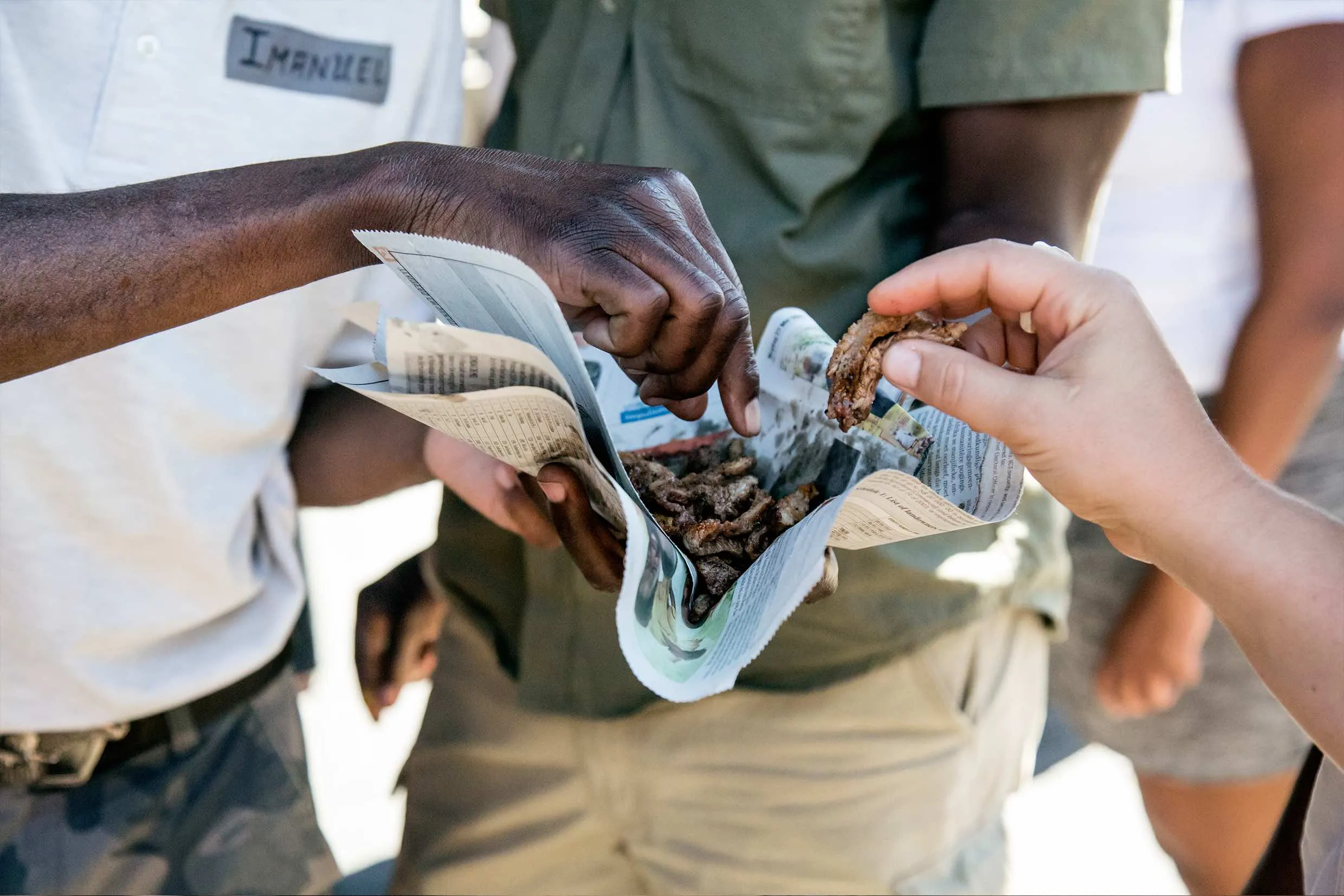
As a second-generation butcher, Florian takes pride in crafting every cut, sausage, and specialty product by hand. Game meat harvested at Ombe doesn't go to waste — it becomes Vienna sausages, biltong, droëwors, and polony that guests take home as a taste of Namibia.
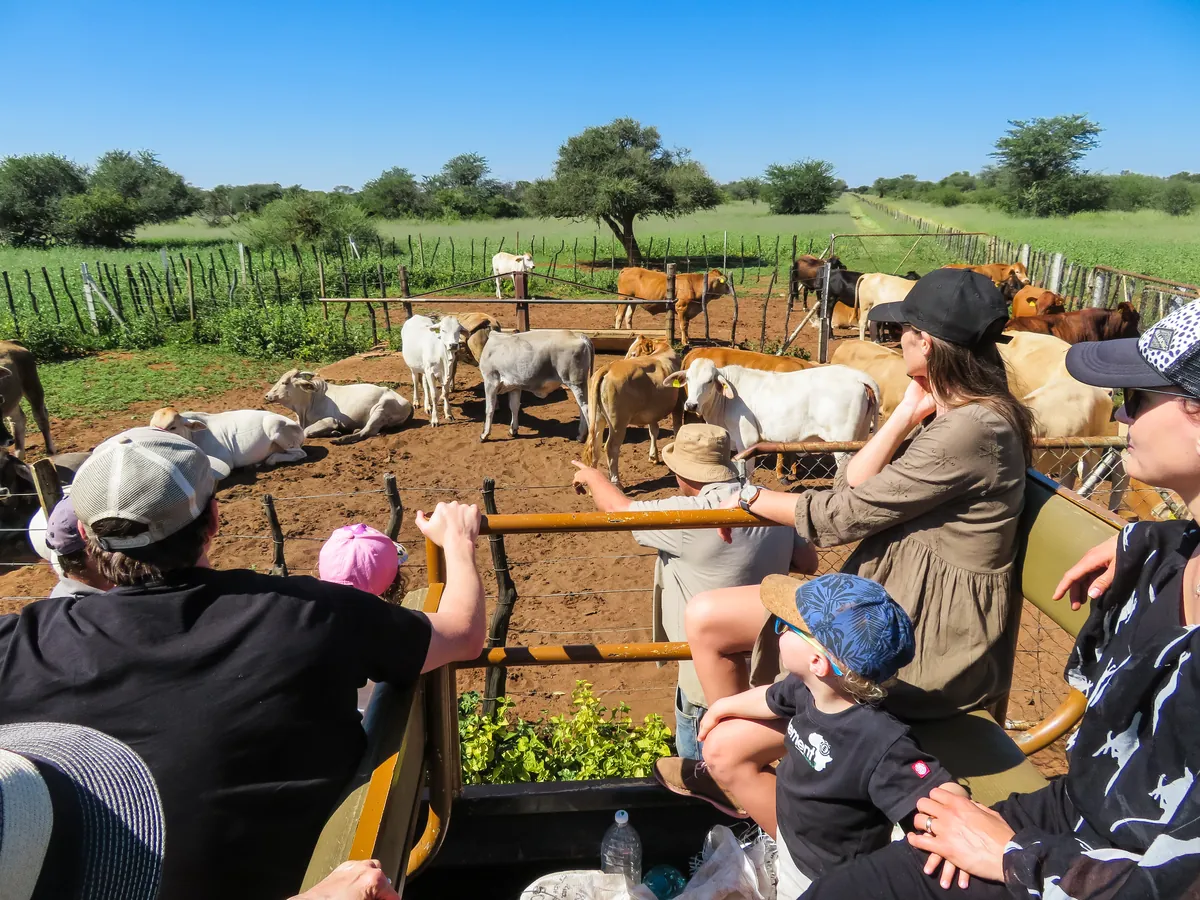
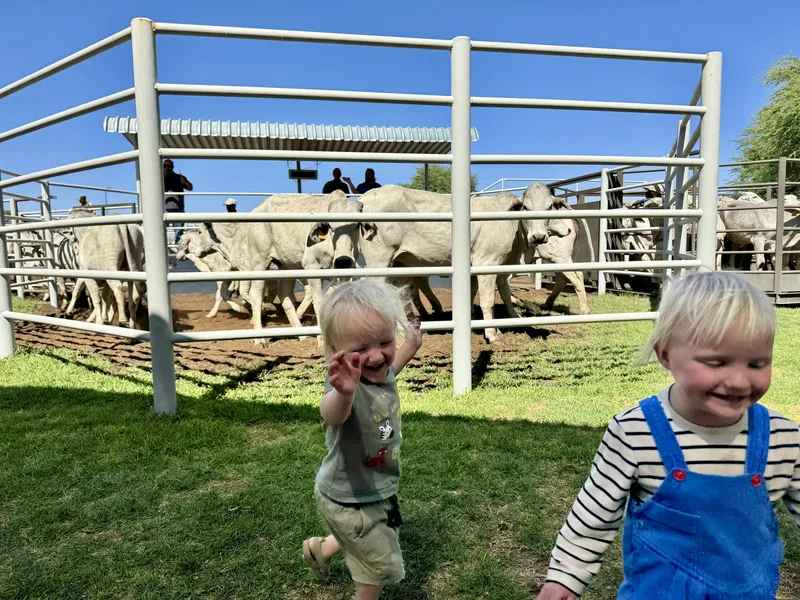
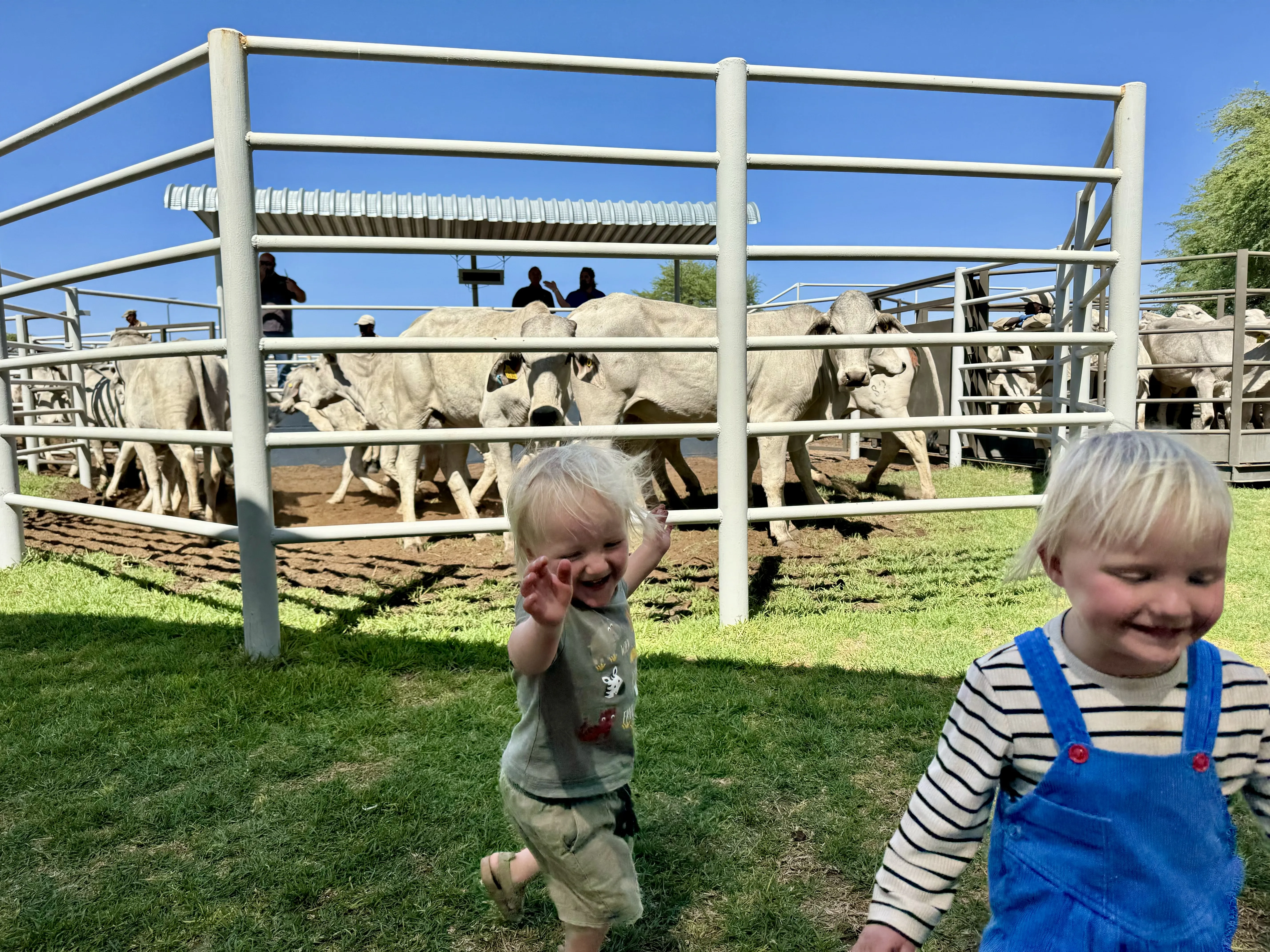
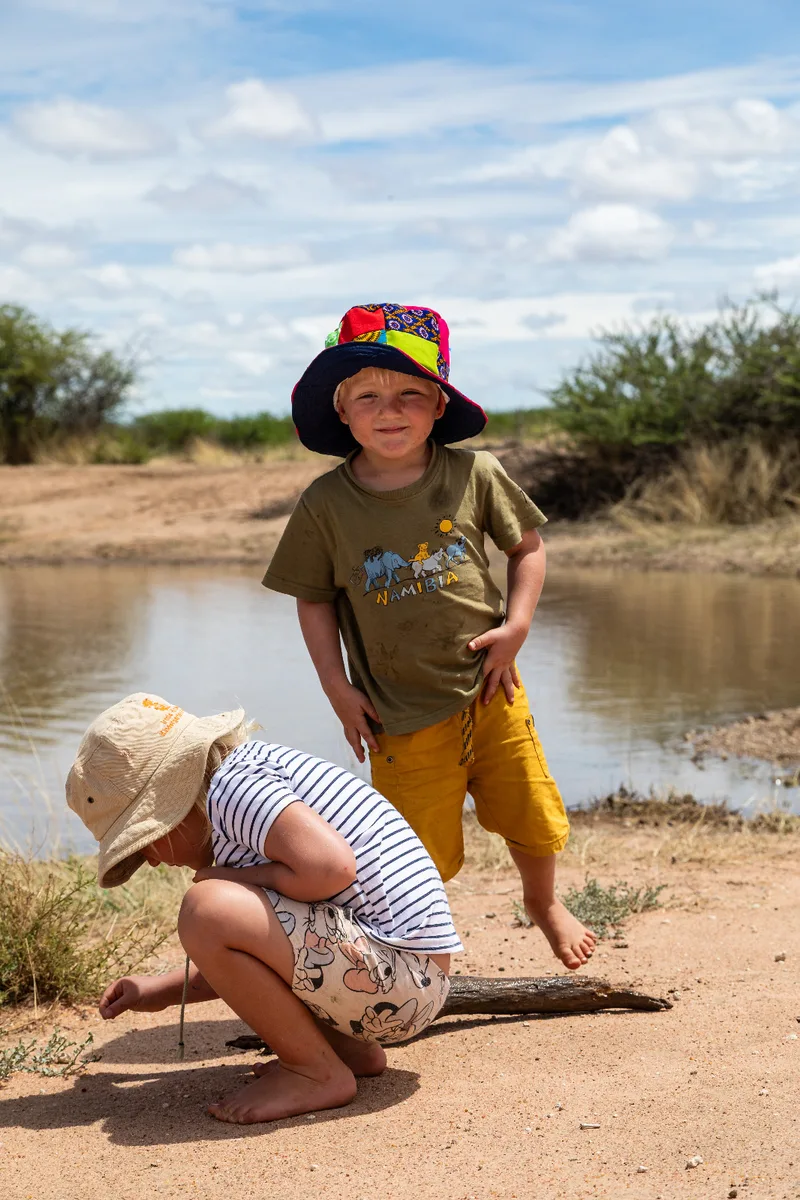
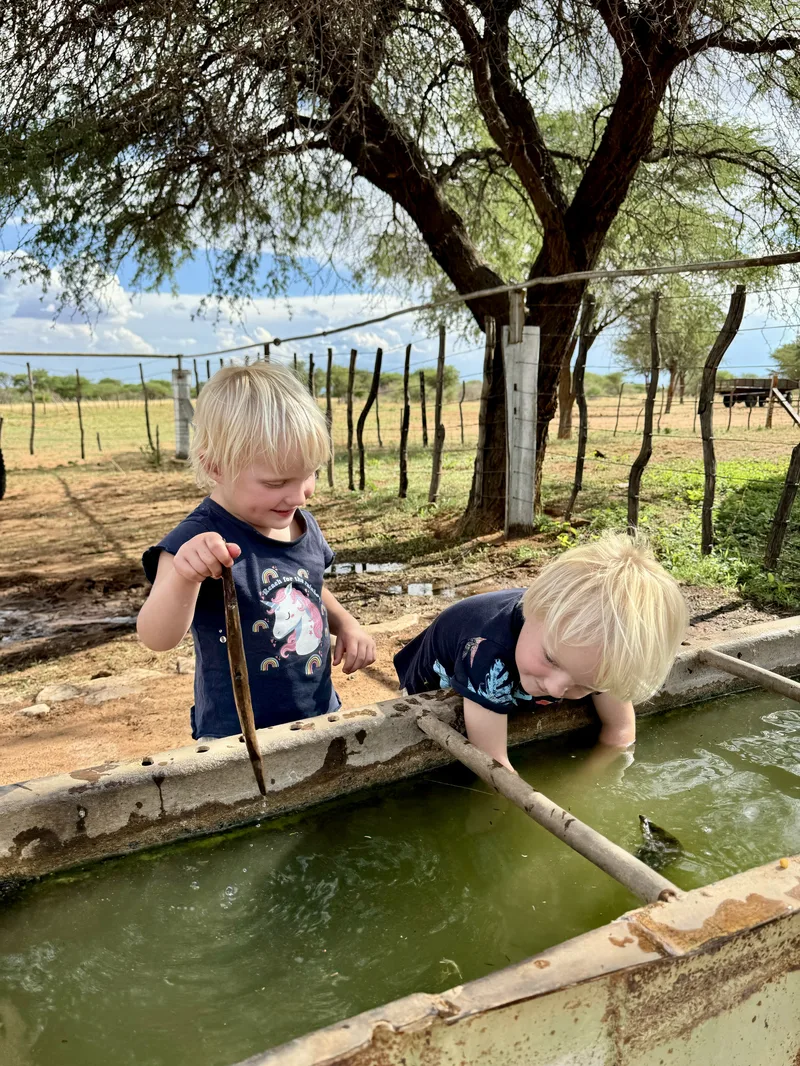
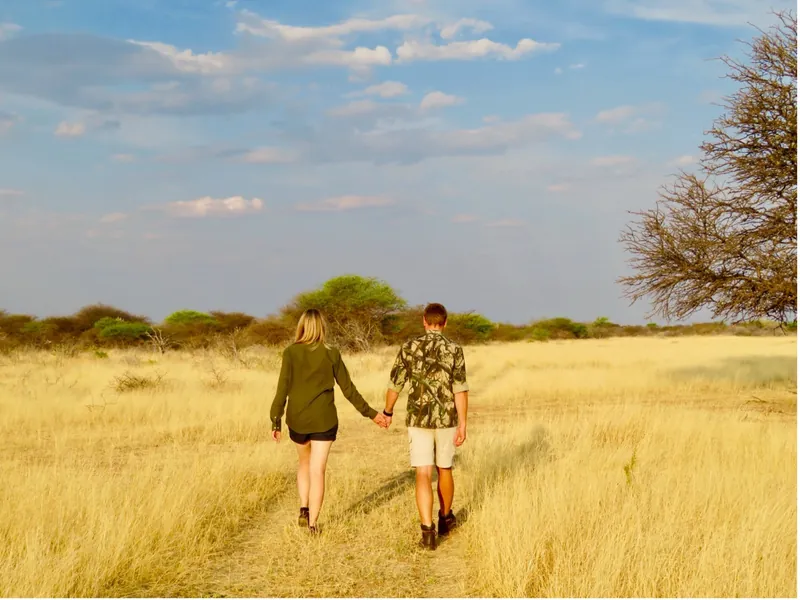
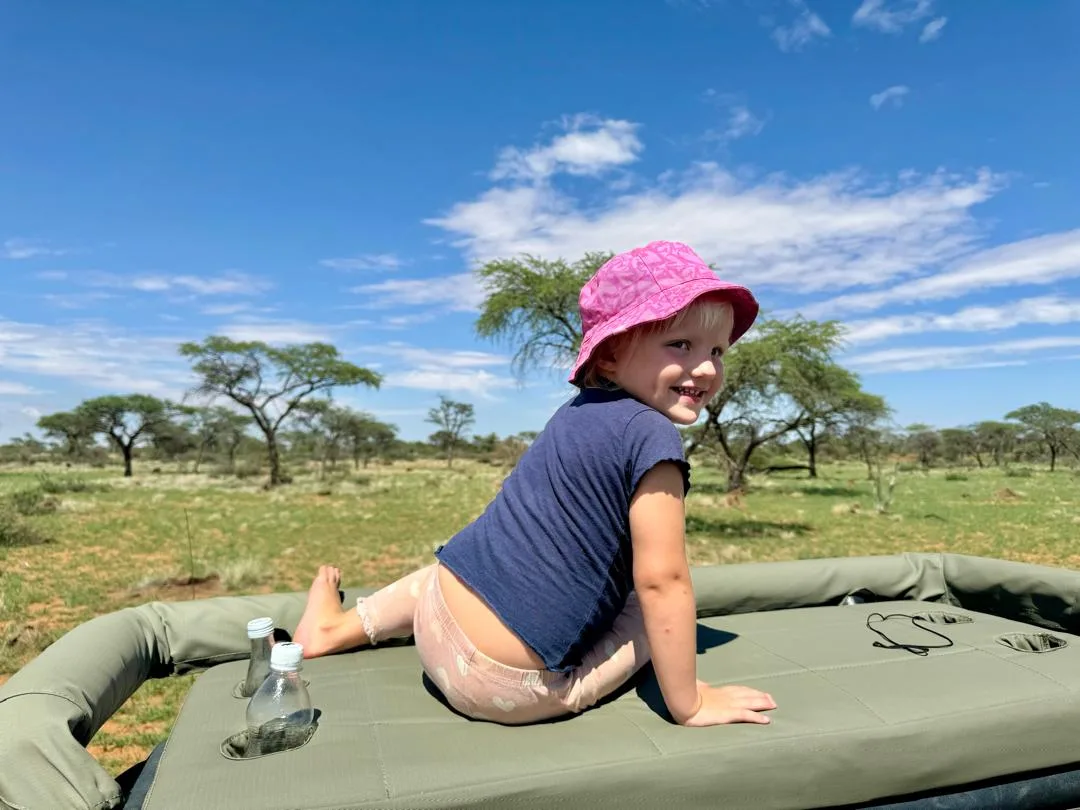
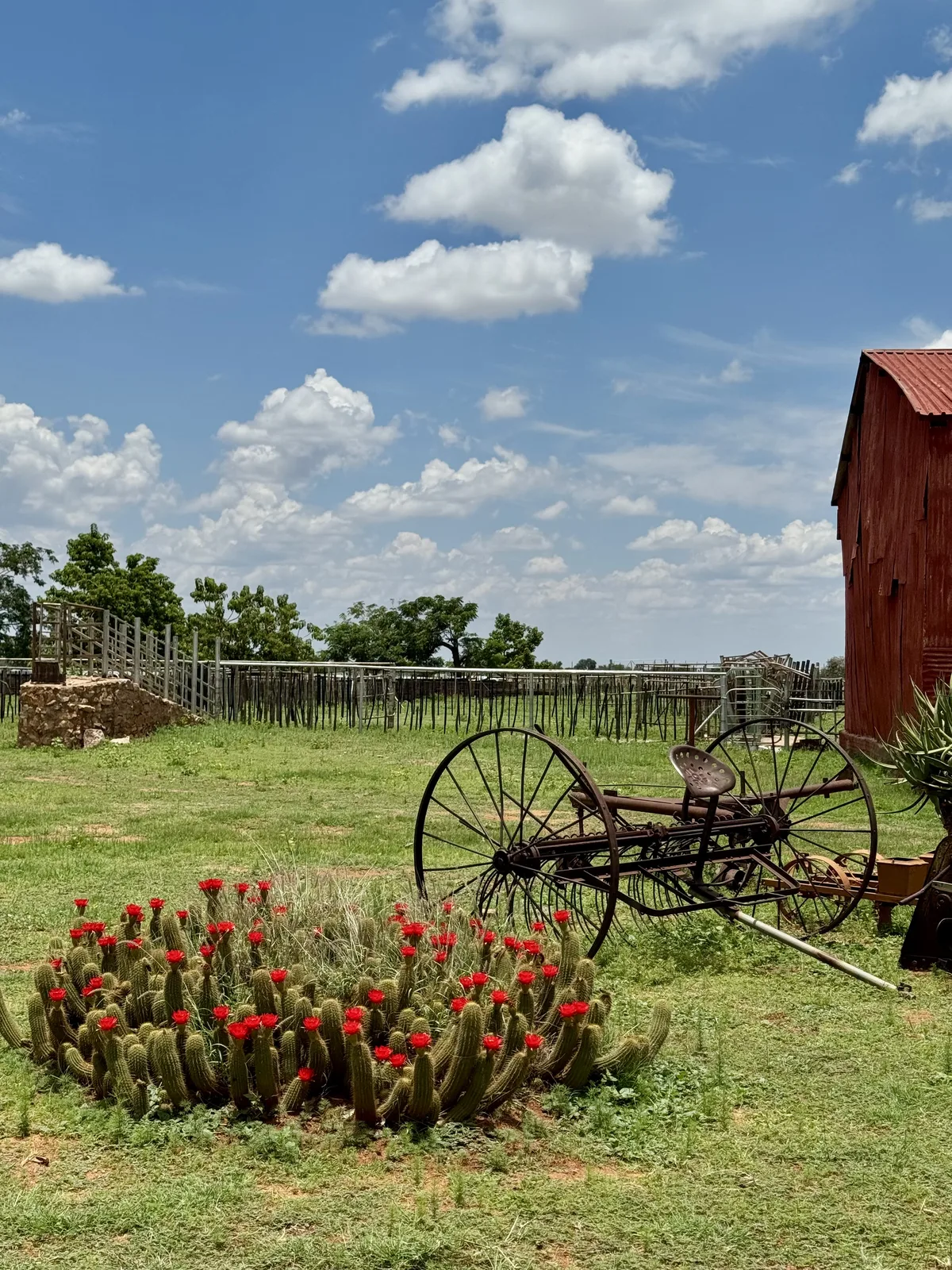
Experience unforgettable days with your partner, family, or friends. Immerse yourself in life on a Namibian farm — adventurous activities, relaxing hours in nature, and impressive landscapes.
For children of all ages.
Ombe offers an outstanding selection of Namibian plains game and predators. All trophy fees are per animal taken, in addition to the daily hunting rate. Prices in Euro.
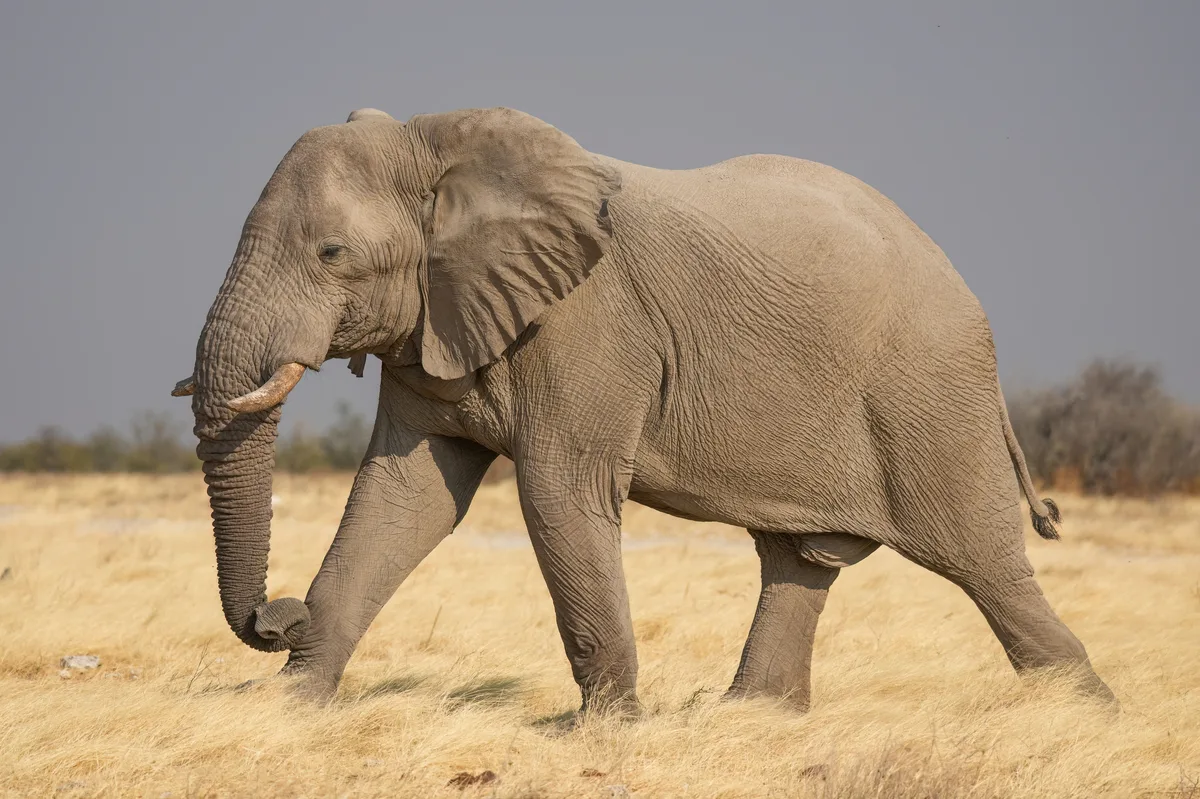
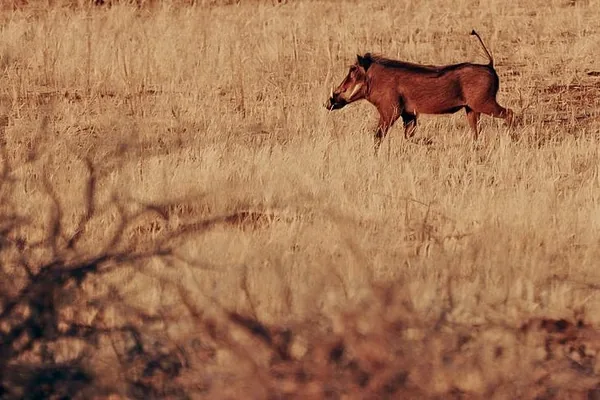
Nowhere else in Namibia will you find such a high number of strong tusker trophies. The healthy warthog population thrives even during dry periods thanks to sustainable practices of the surrounding farming community.
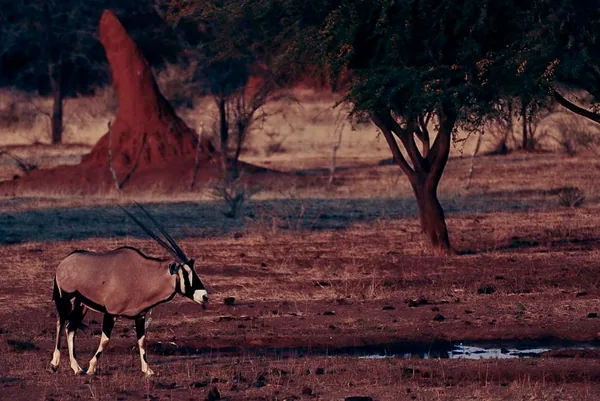
One of the most sought-after trophy species in Namibia. Perfectly adapted to the Kalahari with its characteristic long spear-like horns and distinctive black-and-white facial markings. Ombe consistently maintains a strong population of mature trophy animals.
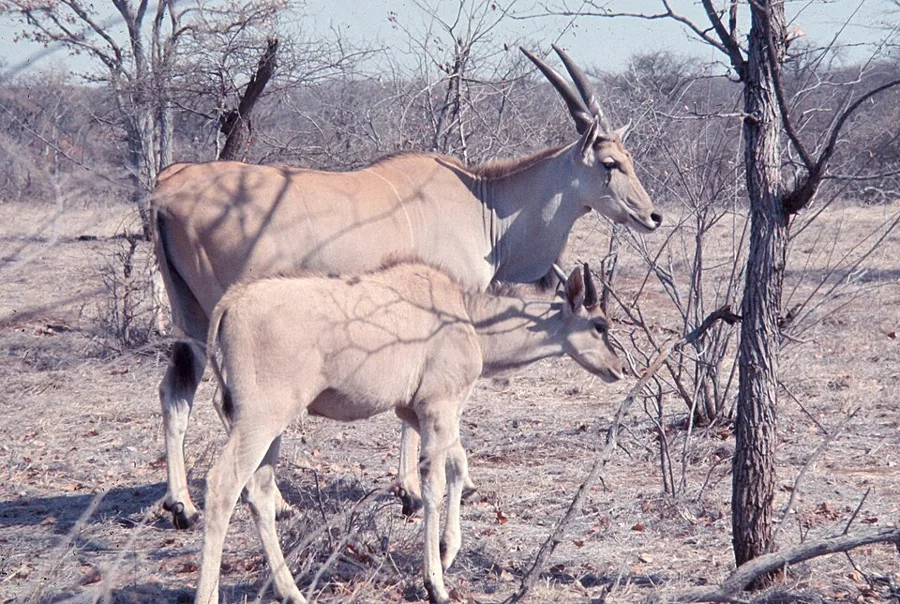
The largest antelope in the world, hunted in dense bushland. Fully grown bulls can weigh up to one ton. At Ombe, three exceptional trophy bulls are released per year — ensuring long-term sustainability and the highest trophy quality.
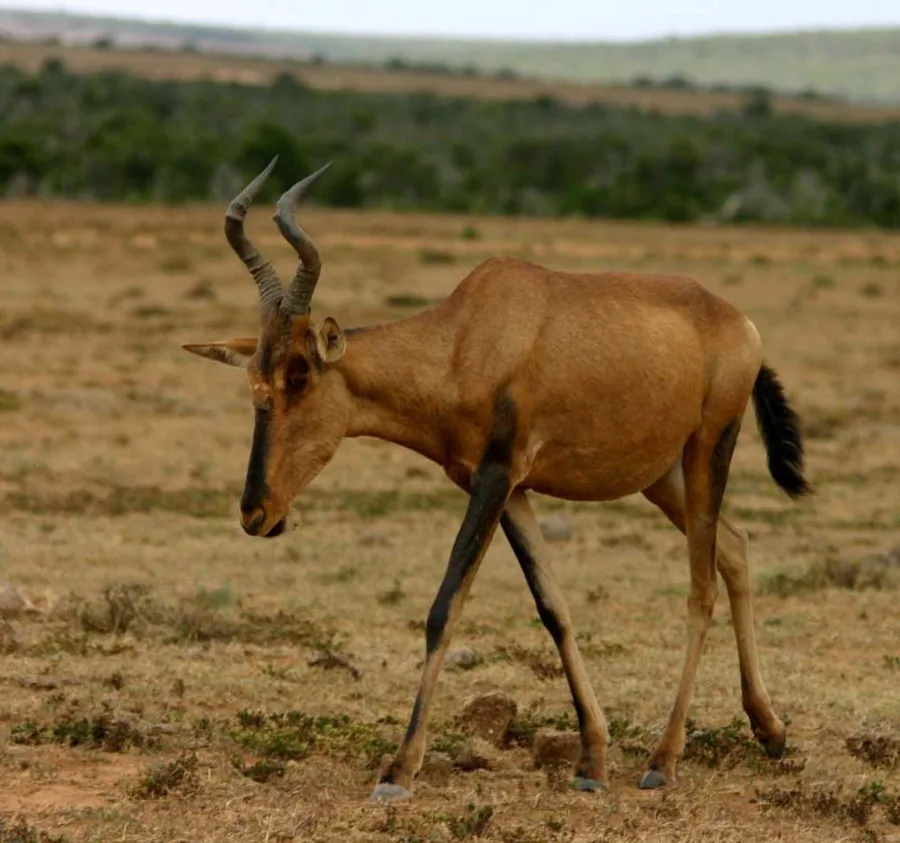
One of the most robust and alert antelope species in Namibia. Both males and females carry horns. Predominantly spot-and-stalk hunting — the excellent eyesight of these animals presents a particular challenge.
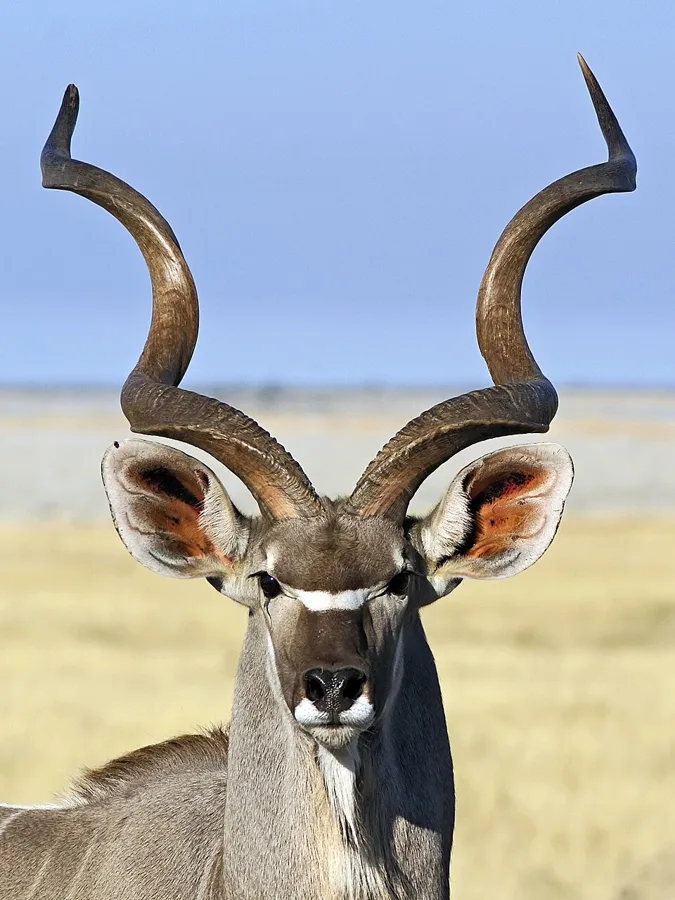
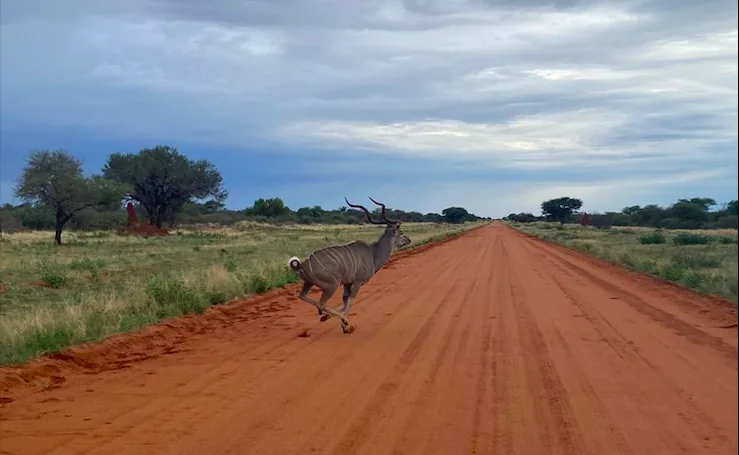
The majestic kudu, with its spiral-shaped horns, is known for its shyness and impressive jumping ability. Usually found in small groups or solitary in dense bushland. Sustainable hunting is especially important as populations are regularly affected by drought and rabies.
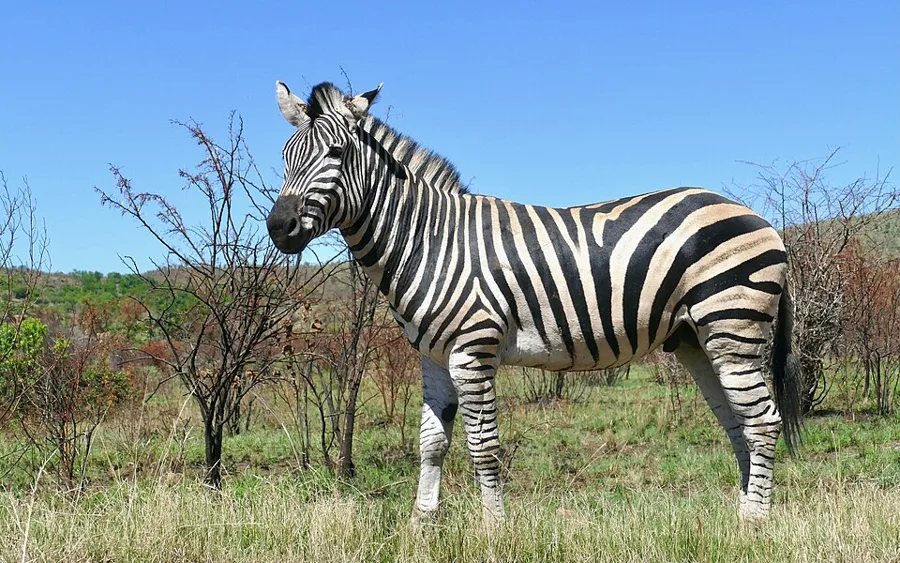
At Ombe, the plains zebra may be hunted. On request, a day trip can be arranged to mountainous regions to hunt Hartmann's mountain zebra.
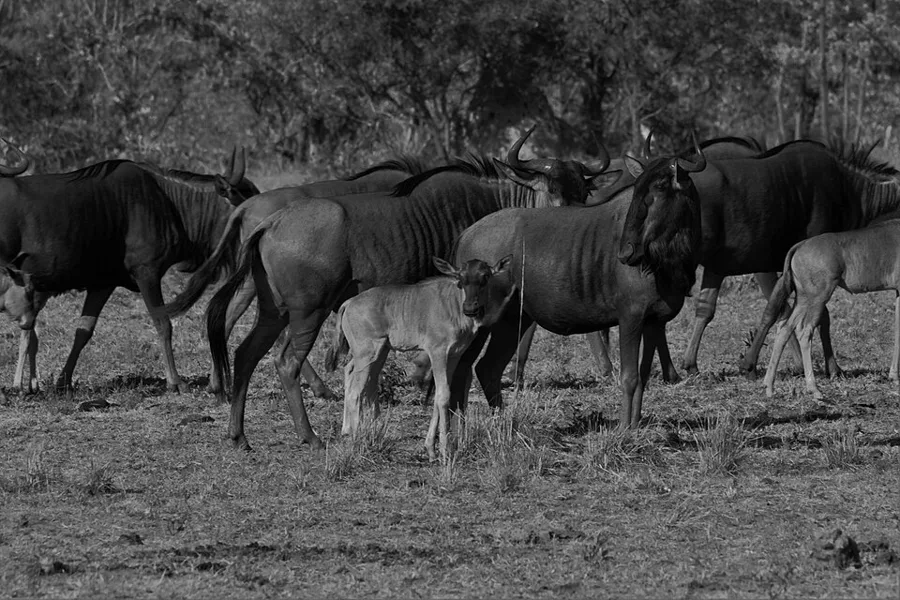
Native to Ombe. Often found on open plains in the early morning, making spot-and-stalk the preferred method. The laterally positioned eyes provide a very wide field of vision — making the hunt demanding.
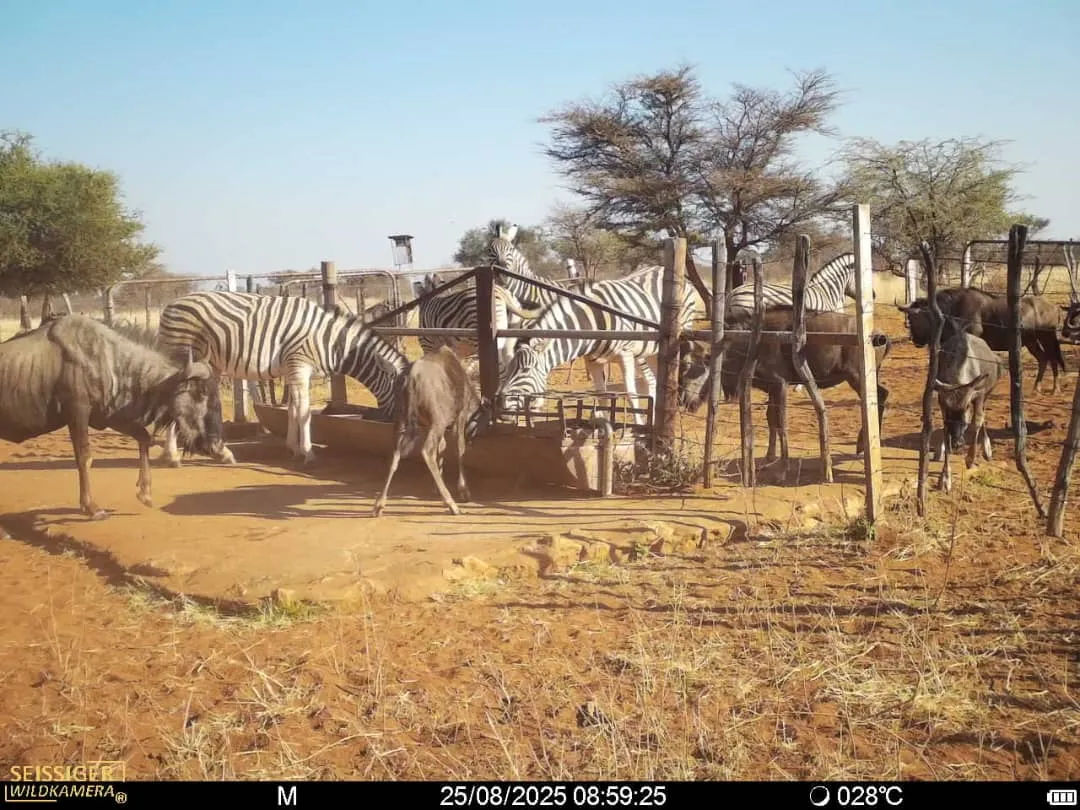
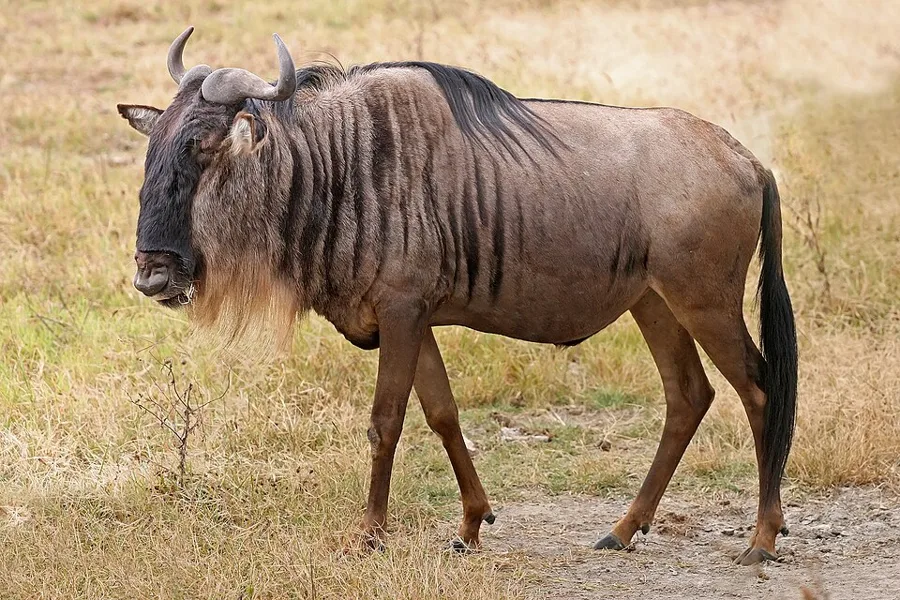
Successfully reintroduced to Namibia with populations now stable. Distinctive features include the white tail and bristly hair on the bridge of the nose. At Ombe often found in association with oryx or zebras.
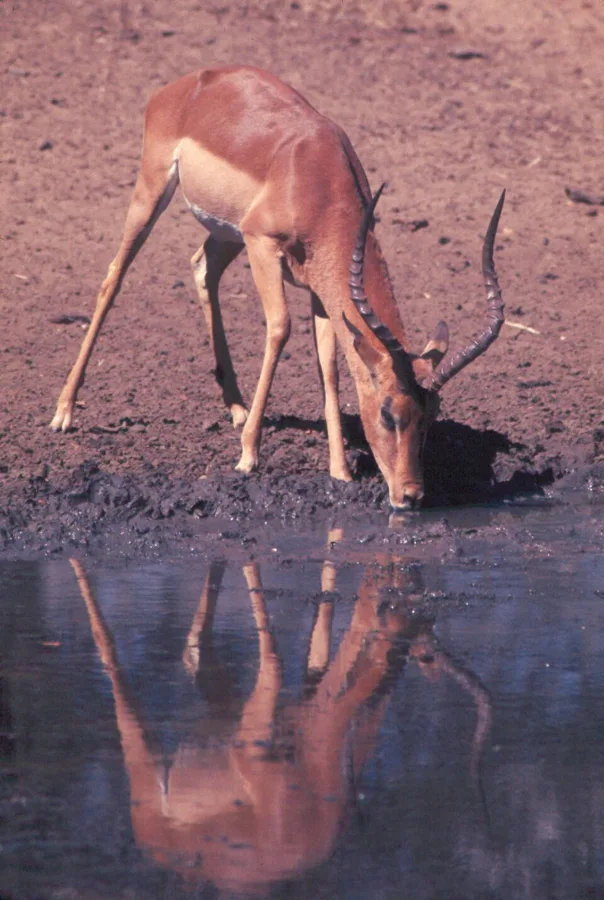
The black-faced impala is native to Ombe. These elegant antelope prefer open savannas and bushy landscapes. Only the males carry horns, used during the rutting season.
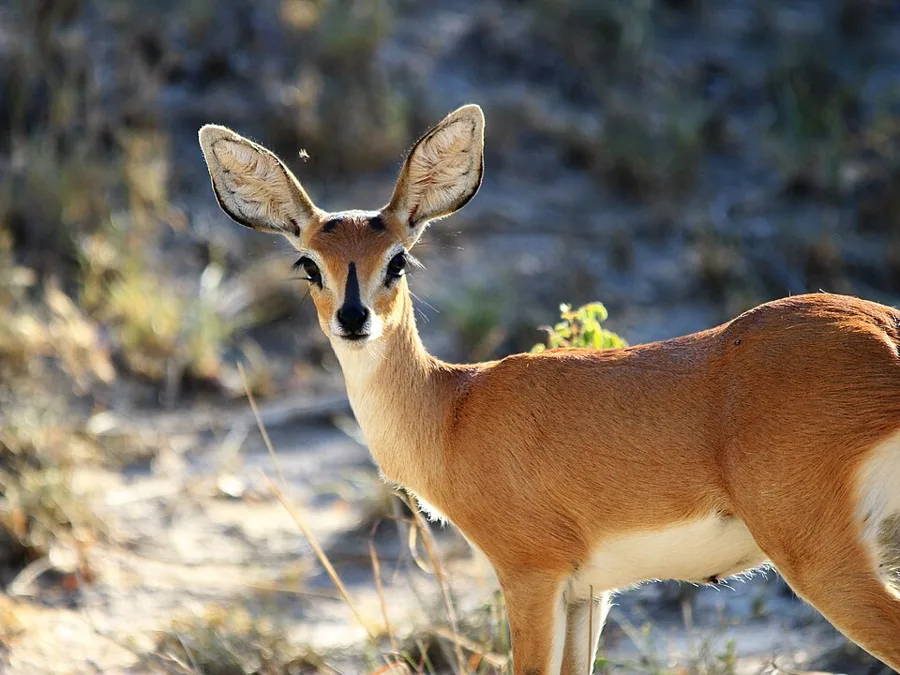
A small antelope and part of the "Little Five." Notable for its monogamous behavior — males and females share overlapping territories. Shoulder height approx. 52 cm; only males carry short, straight horns.
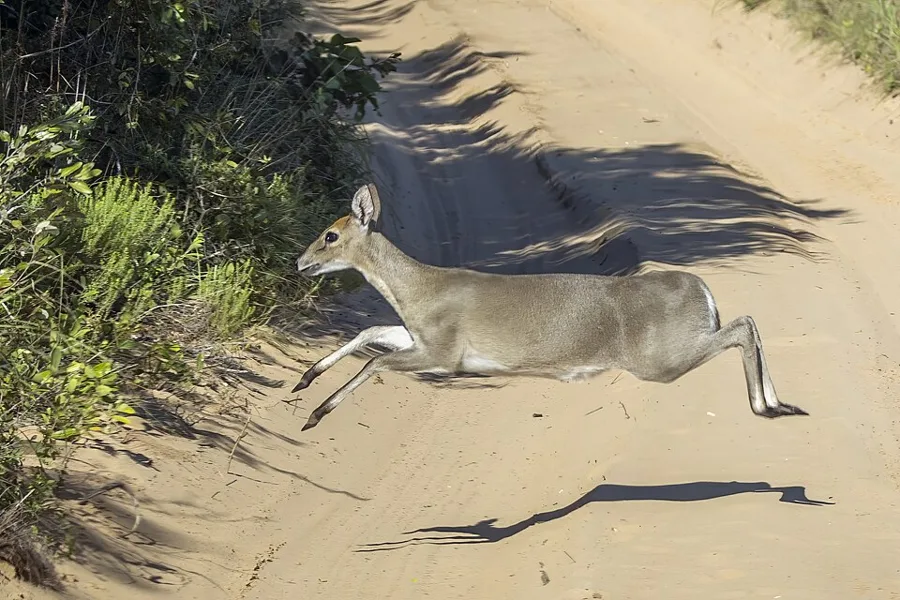
When threatened, the duiker ducks into dense vegetation — giving it its name. Prefers bushy terrain and is mostly solitary. Active both day and night, particularly during cooler periods.
Considered a problem animal in Namibia due to damage to small livestock. Their calls can be heard almost every evening at Ombe. Active mainly at dusk in pairs or small groups.
Around 20 huntable species including Namaqua sandgrouse, francolin, guinea fowl, and pigeon. An ideal complement to spot-and-stalk hunting, conducted in the early morning or late afternoon. Max. two birds per species per guest.
Species occurring on Ombe but not released for hunting: Cheetah · Giraffe · Springbok · Lechwe · Blesbok · Nyala · Waterbuck · Ostrich
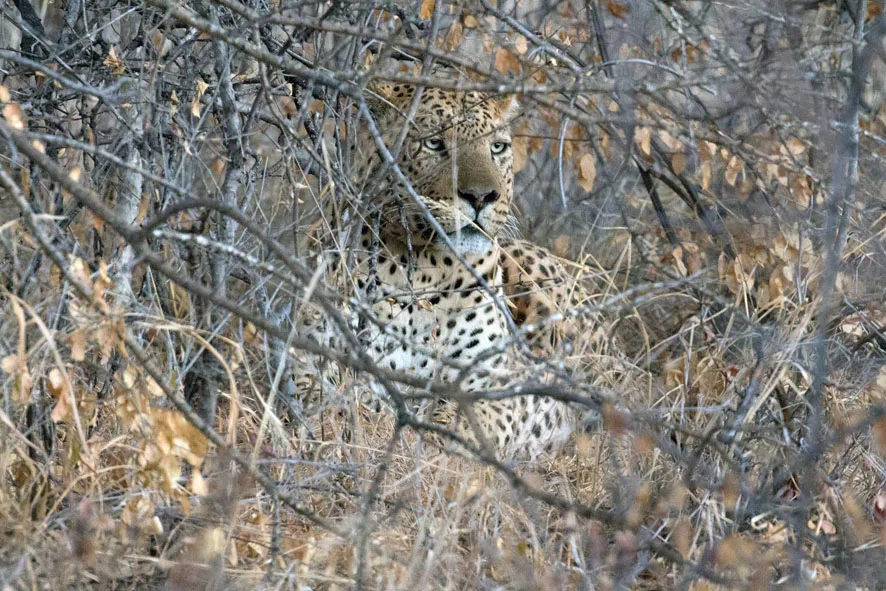
The MET issues approx. 250 permits annually — no more than one per farm for an adult male. Hunting is conducted over bait or from a blind at a carcass, and is considered one of the most challenging hunting experiences. At Ombe, around ten calves are taken by leopards each year.
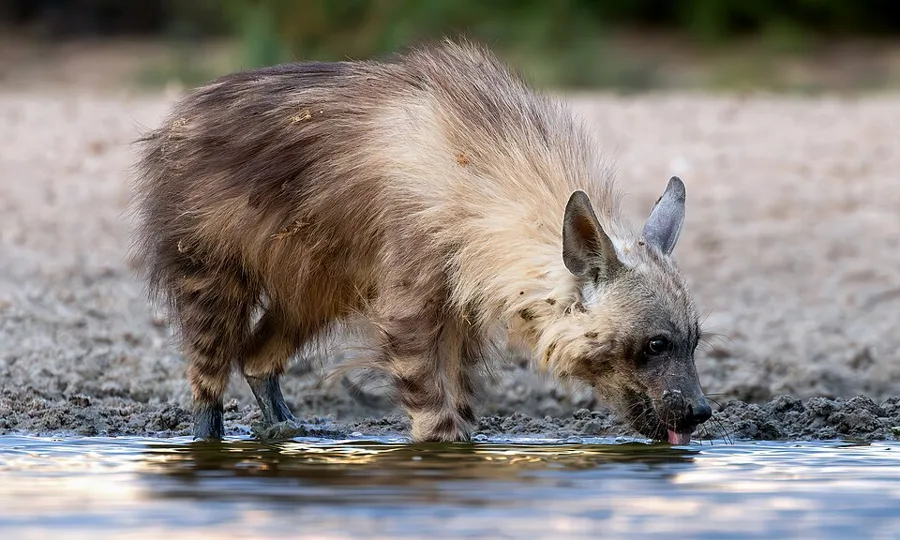
Mostly nocturnal and often hunted alongside leopard. Hunting is conducted at a fresh kill or over bait. Its powerful jaws can crush even bones. As a scavenger, it plays an important ecological role. Weight up to 57 kg, shoulder height up to 80 cm.
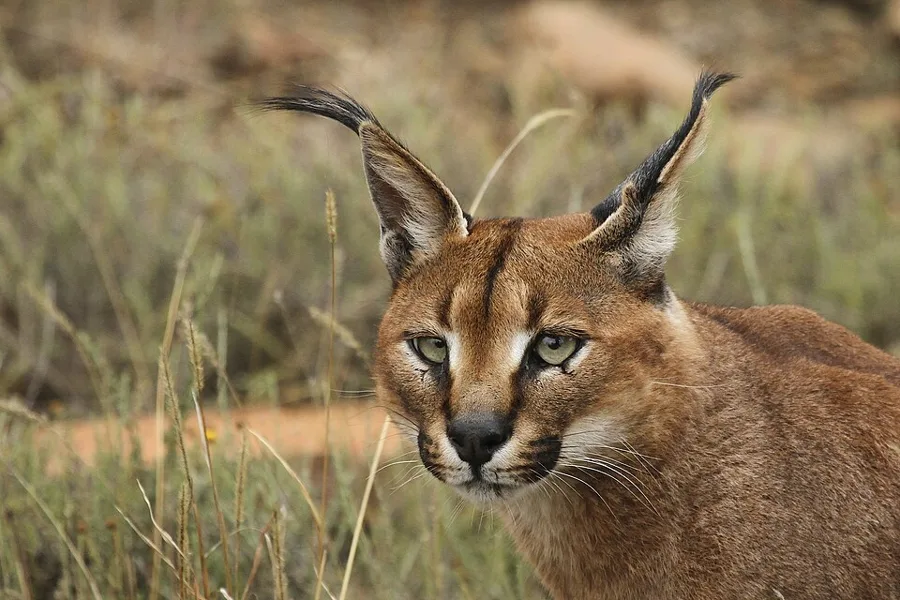
The desert lynx — predominantly nocturnal and found throughout Namibia. Excellent hearing and eyesight make it a highly efficient hunter. Best hunted in winter (May–August) from a blind or over bait.
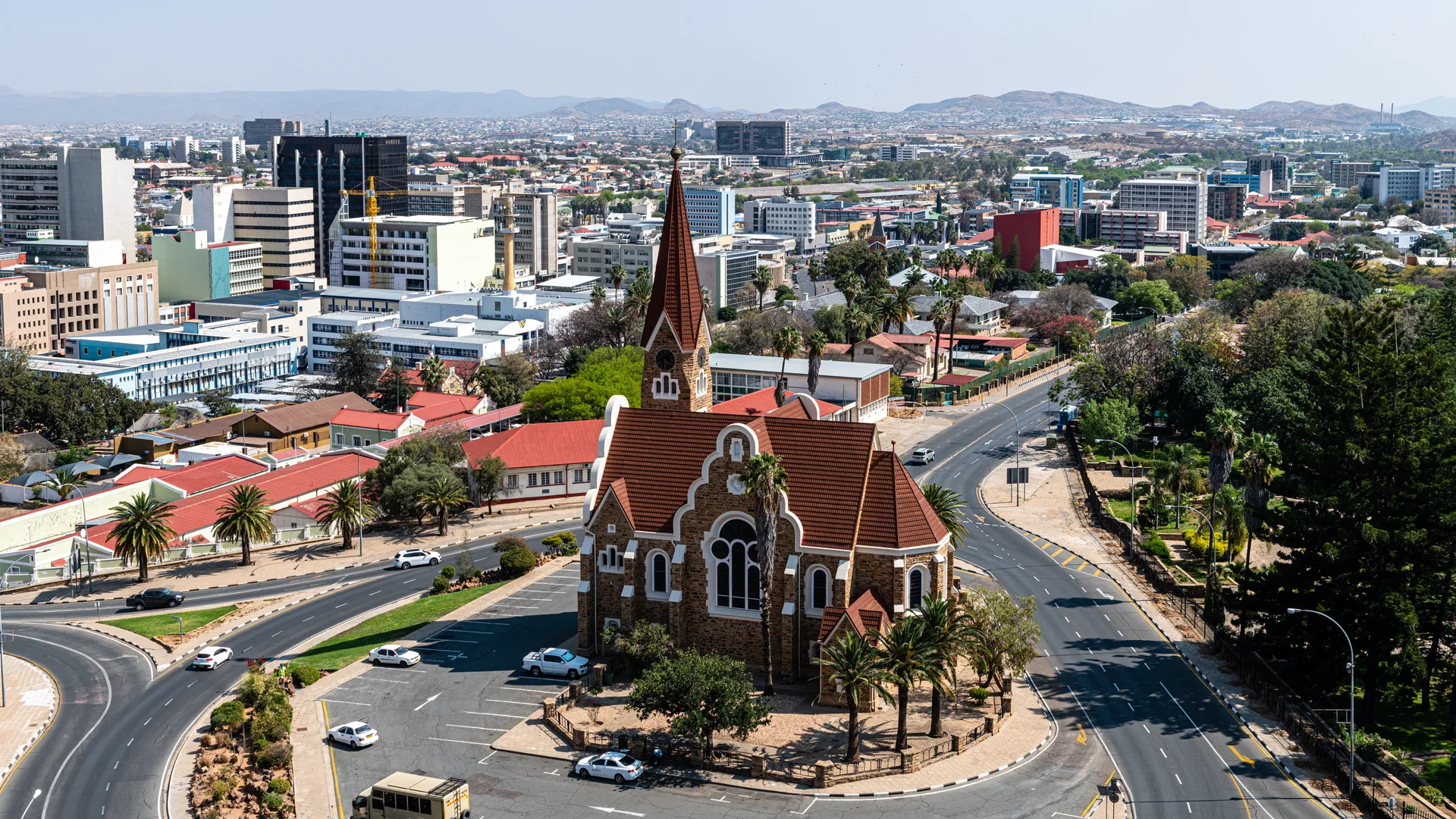
Travel from Europe to Namibia takes approximately 11 hours — particularly convenient due to the minimal time difference. Flights arrive at Hosea Kutako International Airport (WDH) near Windhoek.
Since April 1, 2025, German citizens require a visa for tourist travel to Namibia. Available as an e-visa prior to travel or visa on arrival (subject to a fee). The tourist visa allows a maximum stay of 90 days per year.
Upon arrival, please use our farm address: Ombe Guestfarm & Safari 122 — +264 81 575 7150
When travelling with only one parent: notarised consent letter from the absent parent, copies of both parents' passports. If applicable: death certificate or court order.
Recommendation: consult the Namibian embassy or your country's foreign office before travelling.
No hunting licence is required in Namibia.
Please contact your airline in advance regarding current transport regulations.
| Package | Price (€) |
|---|---|
| 1:1 Hunting — 1 hunter / 1 professional hunter | € 250 / day |
| 2:1 Hunting — 2 hunters / 1 professional hunter | € 235 / day |
| Arrival & departure day / rest day | € 100 / day |
| Observer (full board) | € 100 / day |
| Children 4–12 years | € 80 / day |
| Children 0–3 years | Free |
| Shoulder mount or full skinning preparation | € 30 / animal |
| Rental rifle | € 30 / day |
| Ammunition | € 5 / round |
All prices in Euro. Trophy fees are additional. Subject to change.
To confirm your booking, we require:
We will arrange your hunting permit on your behalf.
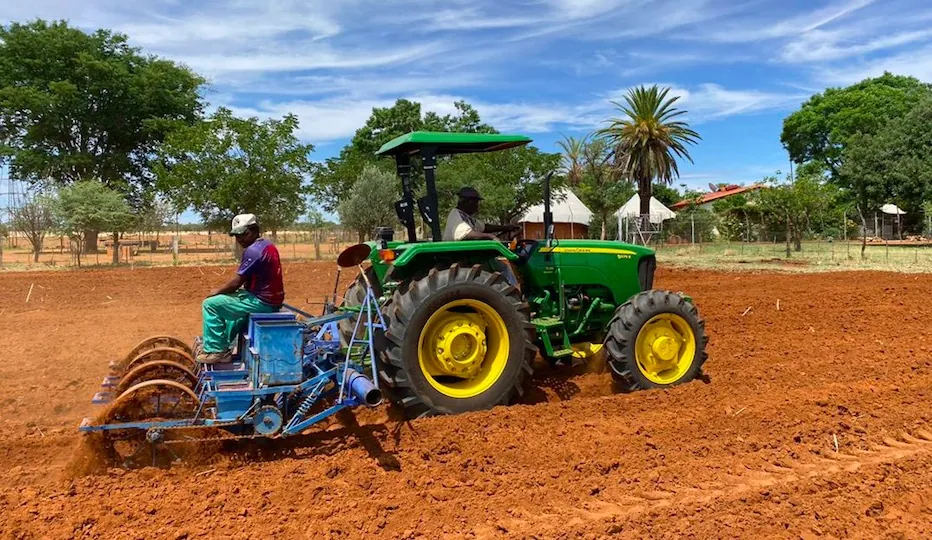
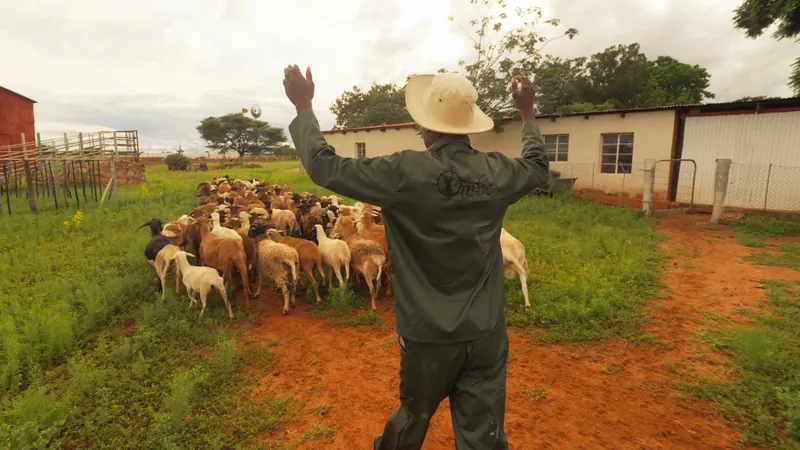
As a fourth-generation family business, we manage two farms together with our team, focusing on sustainable agriculture, professional hunting operations, and authentic guest experiences — in the heart of daily farm life, surrounded by untouched Kalahari nature.
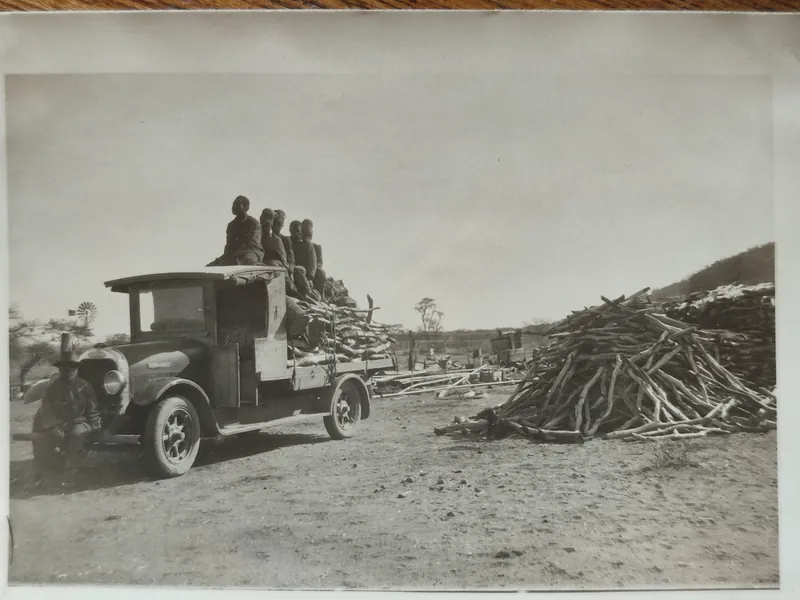
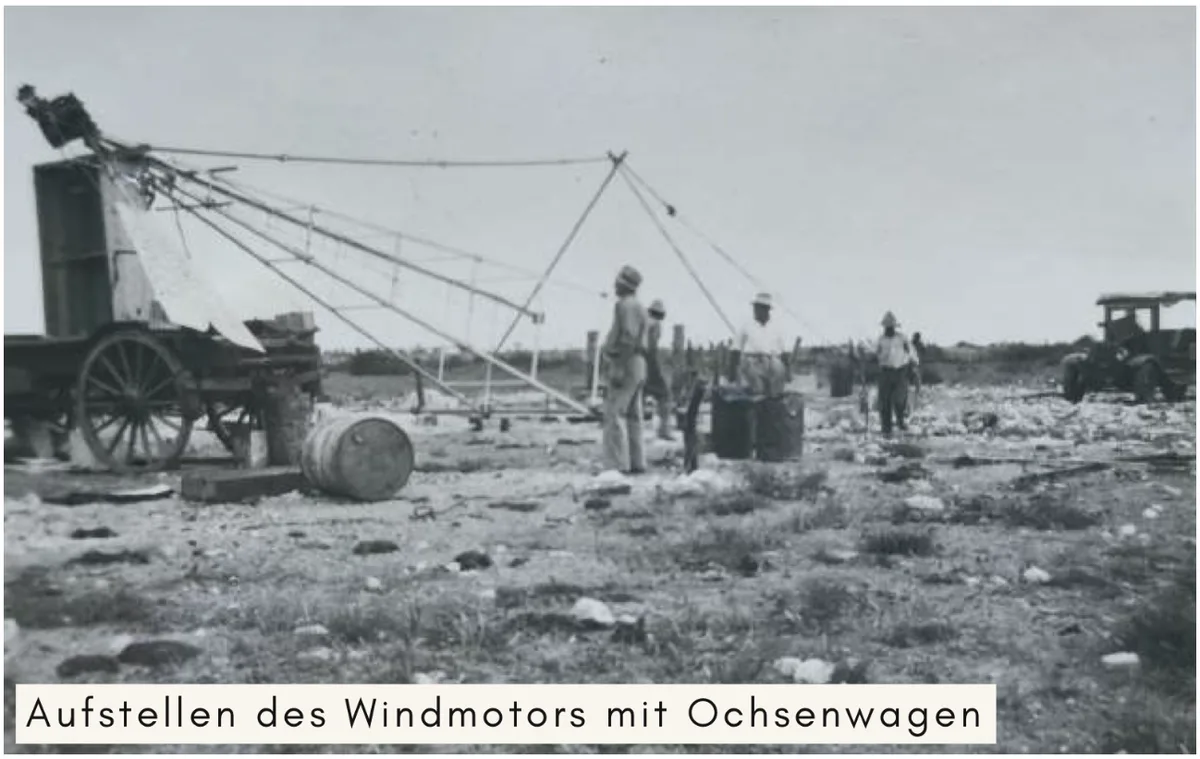
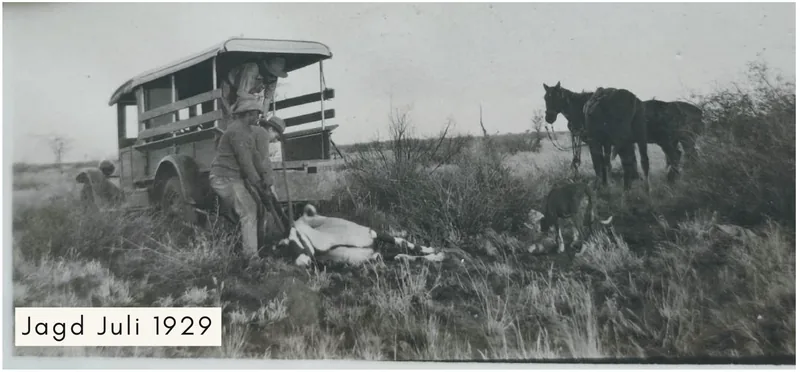
The Fastenau/Zwar family arrived in Namibia in 1913. Through wars, droughts, and economic setbacks, a sustainable farming operation developed across four generations.
Their lives were shaped by hardship, perseverance, and determination. Without electricity or running water, a farm was built from nothing — wells dug, dams constructed, and land cleared under the harshest conditions. Despite drought, illness, and times of war, they laid the foundation for future generations.
"Today we arrived in Swakopmund. The journey was rough, the sea unforgiving. From here we continued inland — without roads, without comfort. Only with horses and one goal: to build our own farm. The land is harsh, but full of opportunity."— Heinrich, 1913
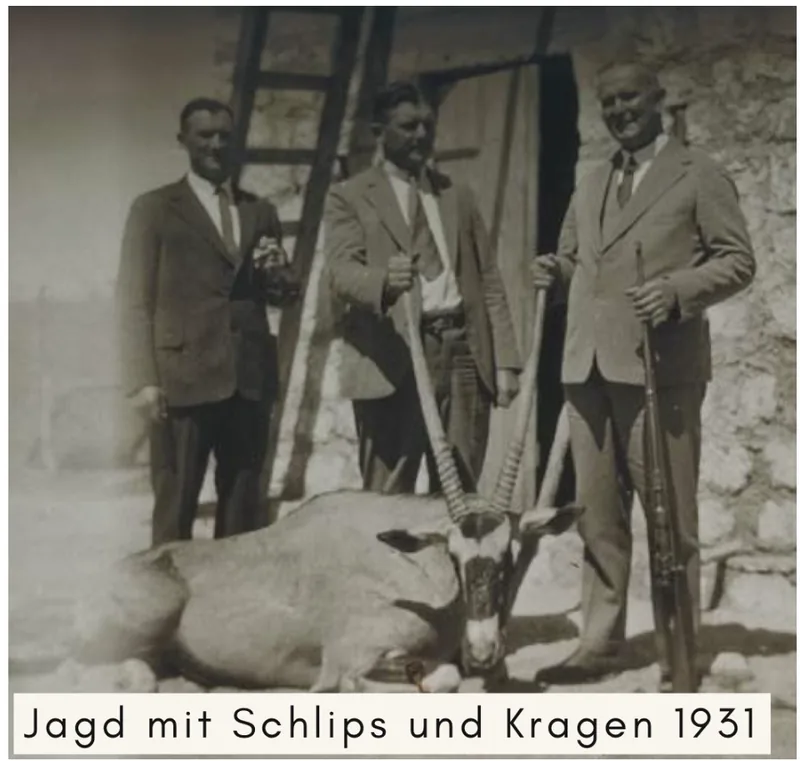
With the takeover in 1966, a phase of expansion and stabilisation began. Infrastructure was improved, water resources were better utilised, and the farm was economically strengthened. In the 1970s, the first international hunting guests were welcomed — laying the foundation for today's hunting operations.
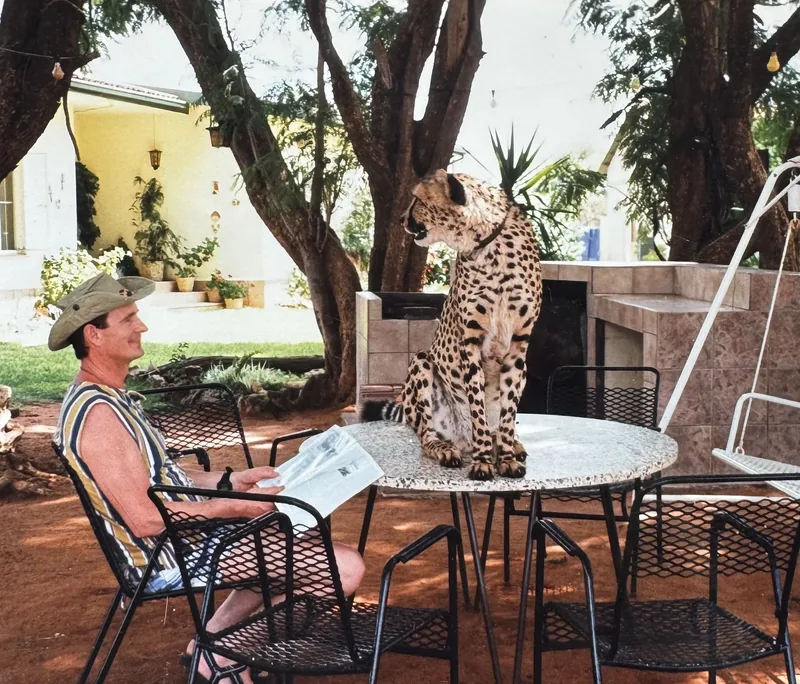
The third generation purchased the family farm in 1988 and increasingly opened the operation to international guests. In the 1990s, Ombe developed into a recognised guest farm. Particularly memorable was the close connection to nature — tame cheetahs such as Teddy and Rex created unique experiences for guests.
In 2019, Florian and Katrin took over, carrying the legacy forward with a deep commitment to sustainable hunting, authentic farm experiences, and community upliftment. Florian manages the butchery — now in its second generation — and leads every hunt personally as a NAPHA-registered professional hunter.
Established in 2019 to give back to the local community that has been part of the farm's life for generations.
"Every hunt at Ombe contributes directly to the foundation — investing in the future of the Kalahari's people."
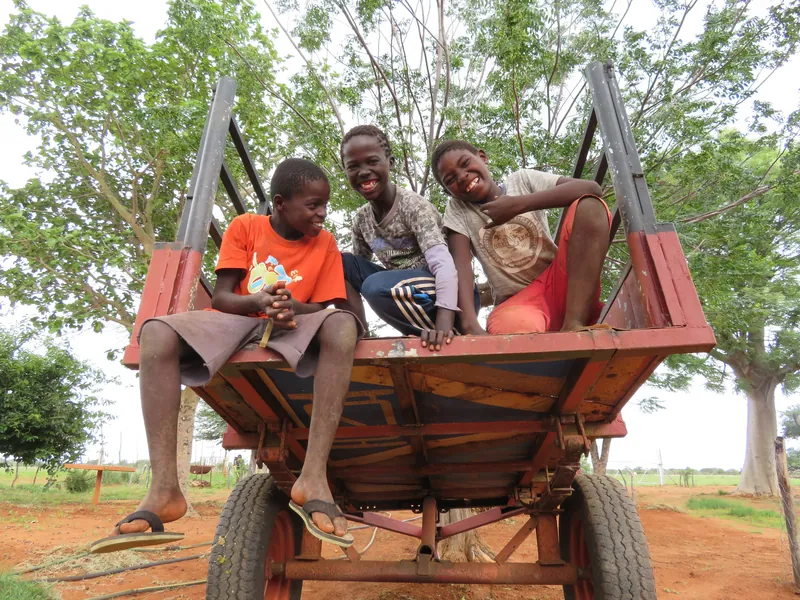
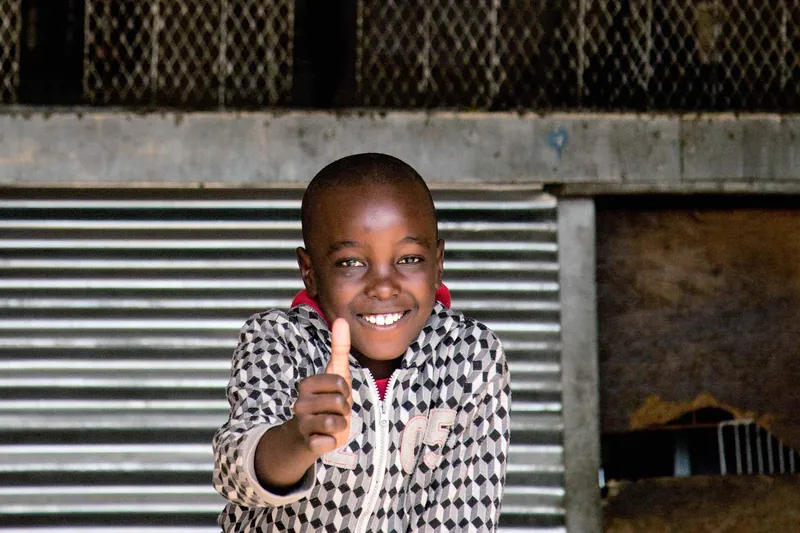
School supplies, food parcels, and holiday programmes for children from surrounding farms and settlements.
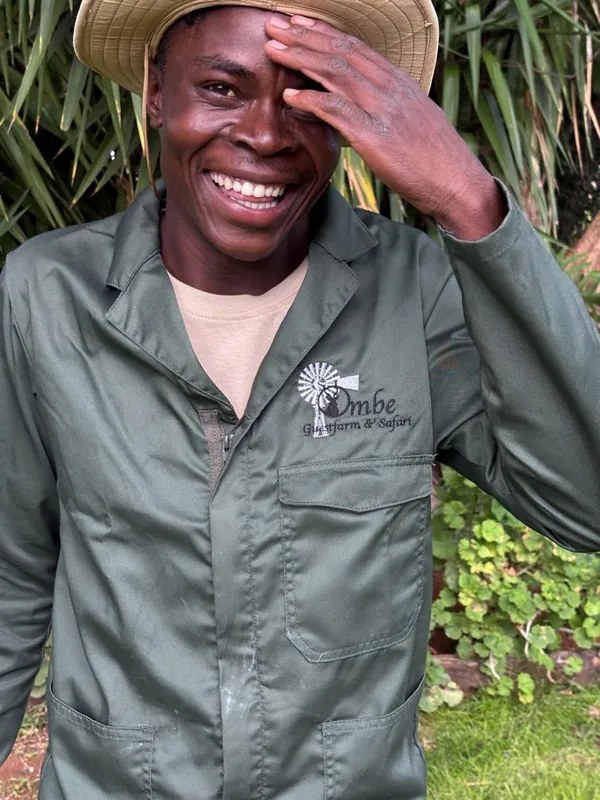
Skills development and training opportunities for all farm employees, strengthening the broader community around Ombe.
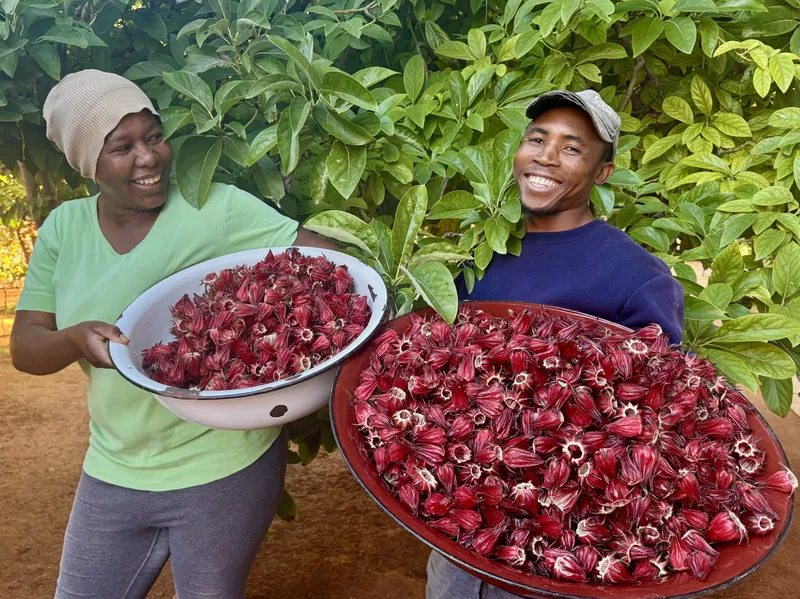
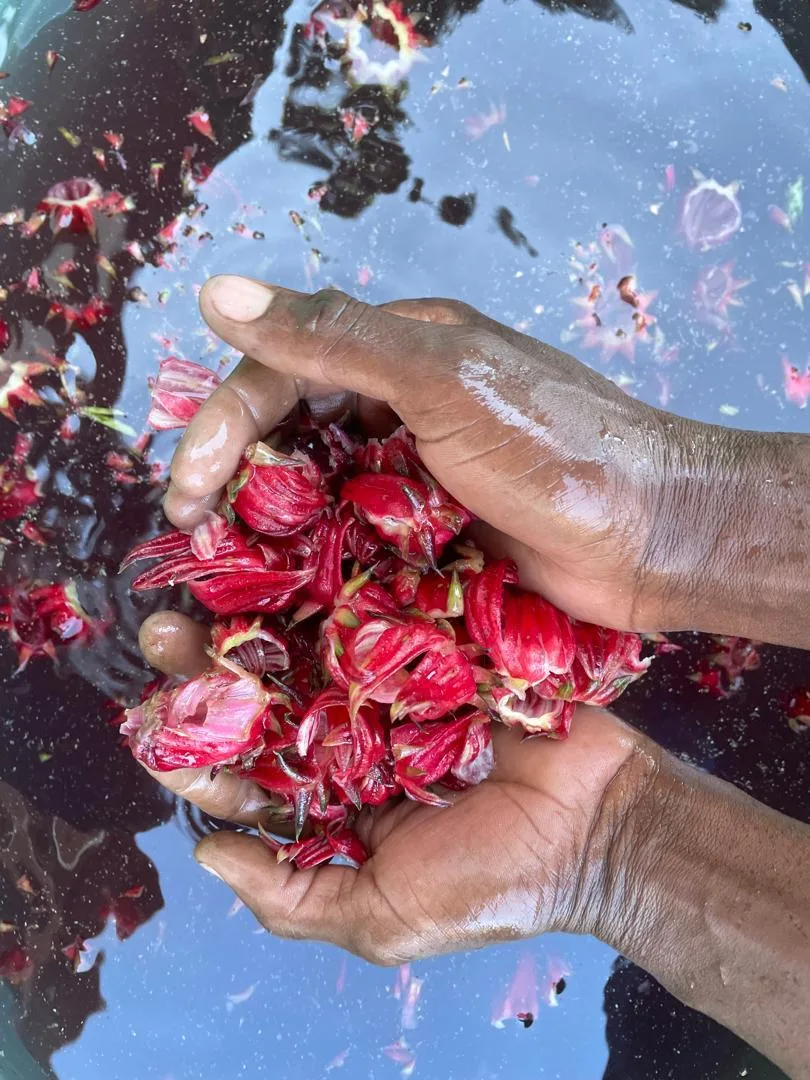
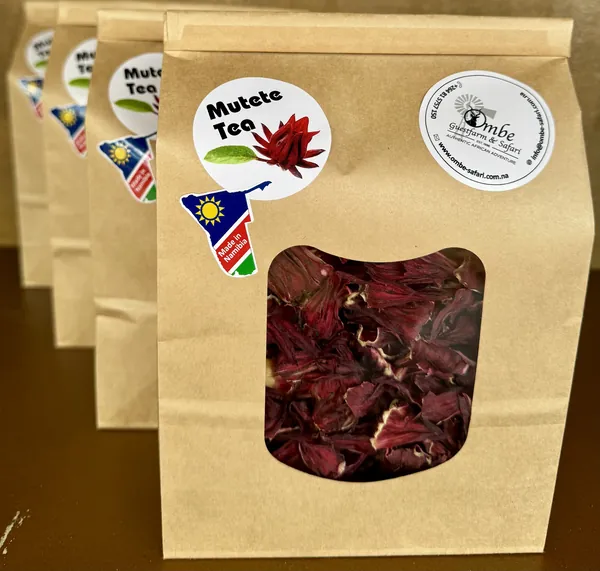
Farm employees grow and sell handmade Rosella tea and crafts directly to guests — a direct income stream promoting women's independence.
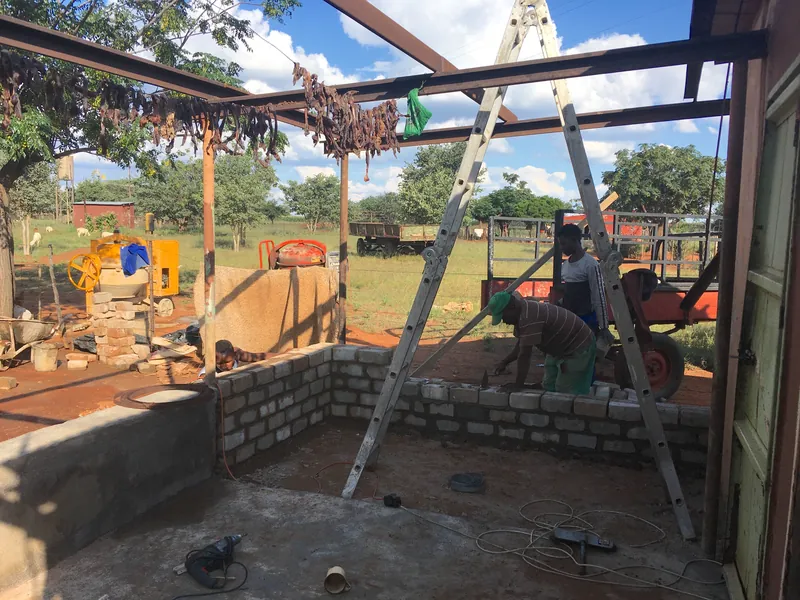
Since 2019: 2 bathrooms, 2 verandas, and 3 outdoor kitchens built — benefiting all employees and their families.
Ombe Guestfarm & Safari
D1268 Road, Kalahari, Namibia